Sixty Joyless De-Britished Uncrowned Commonpoor Years (1949-2009)

Elizabeth II Vice-Regal Saint: Remembering Paul Comtois (1895–1966), Lt.-Governor of Québec
Britannic Inheritance: Britain's proud legacy. What legacy will America leave?
English Debate: Daniel Hannan revels in making mince meat of Gordon Brown
Crazy Canucks: British MP banned from Canada on national security grounds
Happy St. Patrick's: Will Ireland ever return to the Commonwealth?
Voyage Through the Commonwealth: World cruise around the faded bits of pink.
No Queen for the Green: The Green Party of Canada votes to dispense with monarchy.
"Sir Edward Kennedy": The Queen has awarded the senator an honorary Knighthood.
President Obama: Hates Britain, but is keen to meet the Queen?
The Princess Royal: Princess Anne "outstanding" in Australia.
H.M.S. Victory: In 1744, 1000 sailors went down with a cargo of gold.
Queen's Commonwealth: Britain is letting the Commonwealth die.
Justice Kirby: His support for monarchy almost lost him appointment to High Court
Royal Military Academy: Sandhurst abolishes the Apostles' Creed.
Air Marshal Alec Maisner, R.I.P. Half Polish, half German and 100% British.
Cherie Blair: Not a vain, self regarding, shallow thinking viper after all.
Harry Potter: Celebrated rich kid thinks the Royals should not be celebrated
The Royal Jelly: A new king has been coronated, and his subjects are in a merry mood
Victoria Cross: Australian TROOPER MARK DONALDSON awarded the VC
Godless Buses: Royal Navy veteran, Ron Heather, refuses to drive his bus
Labour's Class War: To expunge those with the slightest pretensions to gentility
100 Top English Novels of All Time: The Essential Fictional Library
BIG BEN: Celebrating 150 Years of the Clock Tower

Wednesday, 29 October 2008

I'm Canadian, Hear me Roar

Give it up for the beaver and the maple leaf. Her Majesty's Canadian subjects can afford to be a little smug these days as the rest of the world goes to hell in a handbasket.

"Canada rated world's soundest bank system" according to the World Economic Forum. While such financial institutions as the Royal Bank of Canada, the Toronto Dominion Bank, the Canadian Imperial Bank of Commerce (yes, our banks survived the Great Depression and still emanate from the heyday of the British Empire) show their comparable metal amidst the unprecedented credit crisis facing global capital markets, George Bush and Clement Atlee, I mean Gordon Brown, are busy nationalising and bailing out their nation's banks. I have always thought embracing the American sense of opportunity and entrepreneurship with the British sense of caution and prudence was Canada's historical God-given mission. When are the anarcho-capitalist Annie Oakleys south of the 49th going to learn their lesson? Since when did Britain throw caution to the wind? Answer: since they threw in their lot with the EU.

Vic-Tory in the Great White North: Earlier this month, the Conservative Party led by the Right Honourable Stephen Harper won its second straight mandate, with a stronger minority and just 12 seats shy of a majority government. The world of course greeted this result with a collective yawn, but it surely must be the strangeness of the times when the entire Anglosphere led by Princess Obama realigns itself seemingly wildly to the left, while Canada stays independently and nominally conservative. I think the last time this happened, FDR was president and R.B. Bennett was prime minister.

The path to Conservative dominance: This strategy would bring the Conservatives back to where Diefenbaker left off: The project of building a strongly nationalist, British North American alternative to the United States. It would attempt to build a unified "Canada" of more than just laws and flags, but of one culture and one people, if two languages. Perhaps George Grant even wrote the future Conservative slogan in Lament for a Nation: "Canadians first, foremost and always."

"The trashy flotsam of the global elite": I have my profound differences and sometimes intense dislike of Harper (his cowardly refusal to reign in the Human Rights racket and their deeply disturbing assault on our fundamental freedoms is a case in point), but to imagine the man sharing a few days and cocktails with crooked Russian oligarchs in Corfu is near impossible. George Osborne and Lord Mandy deserve what they get.

Where do you find an IMF to bail out the IMF? The world is going bust, including apparently the IMF, unless it starts to print its own money and lots of it. I'm not sure if the United States is tapped out fiscally, but a possible trillion dollar deficit is a scary proposition. Can you imagine Canada being $100 billion in the red this year? Just think of that, $100 billion! Perhaps it's more unbelievable that the Government of Canada is yet again projecting another budgetary surplus. Let's hope it lasts.

Australia, where even monarchists are republicans. The monarchy is not even a point of debate in Canada, and therefore the land north of summer prudently avoids any associated constitutional risk taking, but barely a day goes by Down Under without some wishful republican talk. The great David Flint at Australians for Constitutional Monarchy is moving the yardstick of republican debate by arguing that Oz is already effectively a Crown Republic. This would have to be the ultra, ultra-minimalist model for republican constitutional change, so minimalist that nothing changes. Keep the Crown. Declare yourself a republic. Brilliant. Problem is, so long as there is a Queen of Australia, you can't call yourself a Crown Republic. More on this in another post.

So I ask the question, which country is the most politically conservative, financially secure, jealously independent and constitutionally sensible nation in the English-speaking world right about now? Britain may be more Tory and the United States more right wing, but you'd be hard pressed to find on the planet any country more conservative, more secure, more independent and more sensible than Canada.


Read the full article >>

Tuesday, 28 October 2008

Friday, 24 October 2008

Scenes of Edwardian London

Because this blog sometimes has the profound spiritual satisfaction of an Edwardian Gentlemen's Club, dating roughly back to 1904, I thought it would be useful to show our viewers what it was like to take a blissful stroll in Imperial London during the summer of that very year.


Read the full article >>

Wednesday, 22 October 2008

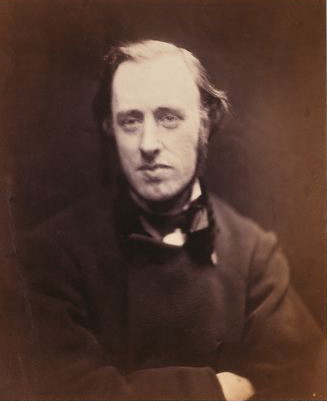
W.E.H. Lecky – Brave Critic of the New Age

Five score and five years ago today, October 22, 1903, William Edward Hartpole Lecky passed on from this world. Lecky was a historian, a political philosopher, and a Member of Parliament at Westminster for Dublin University. The new age was rising, and against it stood W.E.H. Lecky. In the words of William Murchison, he chose to write – and fight.

William Edward Hartpole Lecky
Writes William Murchison further in the introduction to W.E.H. Lecky's Democracy and Liberty:

Democracy was the late Victorian age's great passion – a concept not just to profess but to translate into reality. The democracy professed was less radical than that of the French revolutionaries who, in Burke's day, had cried "Liberty, Fraternity, Equality!" – and then decapitated thousands of their free and equal brethren. Democracy to the Victorians, meant something relatively high-minded – government by the majority for the benefit of the majority. The principle was amiable enough, certainly. It was in the practical application that things began to go wrong, as Lecky and a few others easily discerned. The implications of democracy for good government, for liberty – for precisely the values that democracy was meant to assert – were deeply disturbing.
William Murchison describes Democracy and Liberty further:
The argument of the book is the incompatibility of two concepts which, in the late 20th century, are regarded virtually as twins – democracy and liberty. The one might seem, at first glance, to reinforce and invigorate the other. But it was not so, as Lecky proceeded to establish in detail.
Murchison continues:
What had worked best for Britain, so far as he was concerned, was the electoral system that prevailed from the Reform Bill of 1832 until the Reform Bill of 1867. In 1832, the middle class had been enfranchised. The change had, at the time, split the country asunder, but it had worked. This was because, in Lecky's view, it had admitted to power a class of men solid, trustworthy, educated, and hard-working. Their merits, not their abstract “rights,” qualified them for the franchise. It was different with the millions granted the vote in 1867 and 1884. Sheer numbers was what mainly seemed to commend them as voters.
Murchison goes on:
What Lecky feared was that his country's government would pass out of the hands of gentlemen and “into the hands of professional politicians” – like those to be found in the United States.
Further Murchison writes:
Lecky was concerned, accordingly, that gentlemen should continue to govern. He was concerned especially for the future of the House of Lords, which fast was coming to be regarded as a feudal relic, occupying a “secondary position in the Constitution.” “Man for man, he wrote, “it is quite possible that (the Lords) represents more ability and knowledge than the House of Commons, and its members are certainly able to discuss public affairs in a more single-minded and disinterested spirit.” The peers' “superiority of knowledge” was “very marked.” They were more than ornamental; they contributed, along with the Throne, to the kingdom's “greatness and cohesion.”
Lecky was a Privy Councillor and was bestowed with the Order of Merit.

W.E.H. Lecky blamed the rebellion in the American colonies largely on the encroachments of Parliament on Royal Prerogative.

Of the American Electoral College Lecky wrote:
In this manner it was hoped that the President might be elected by the independent votes of a small body of worthy citizens who were not deeply plunged in party politics. But, as the spirit of party intensified and the great party organisations attained their maturity, this system wholly failed.
Of President Andrew Jackson Lecky wrote:
The modern system of making all posts under the Government, however unconnected with politics, rewards for party services was organised, in 1829, by Andrew Jackson. This President may be said to have completed the work of making the American Republic a pure democracy, which Jefferson had begun. His statue stands in front of the White House at Washington as one of the great men of America, and he assuredly deserves to be remembered as the founder of the most stupendous system of political corruption in modern history.
Of democracy and regulation Lecky wrote:
In our own day, no fact is more incontestable and conspicuous than the love of democracy for authoritative regulation.
Of the House of Commons Lecky wrote:
Of all the forms of government that are possible among mankind, I do not know any which is likely to be worse than the government of a single omnipotent democratic Chamber. It is at least as susceptible as an individual despot to the temptations that grow out of the possession of an uncontrolled power, and it is likely to act with much less sense of responsibility and much less real deliberation. The necessity of making a great decision seldom fails to weigh heavily on a single despot, but when the responsibility is divided among a large assembly, it is greatly attenuated. Every considerable assembly also, as it has been truly said, has at times something of the character of a mob. Men acting in crowds and in public, and amid the passions of conflict and debate, are strangely different from what they are when considering a serious question in the calm seclusion of their cabinets.
Of the worship of majorities Lecky wrote:
He will not, if he is a wise man, be reassured by the prevailing habit, so natural in democracies, of canonising, and almost idolising, mere majorities, even when they are mainly composed of the most ignorant men, voting under all the misleading influences of side-issues and violent class or party passions. The ‘voice of the people,’ as expressed at the polls, is to many politicians the sum of all wisdom, the supreme test of truth or falsehood. It is even more than this: it is invested with something very like the spiritual efficacy with theologians have ascribed to baptism. It is supposed to wash away all sin. However unscrupulous, however dishonest, may be the acts of a party or of a statesman, they are considered to be justified beyond reproach if they have been condoned or sanctioned at a general election. It has sometimes happened that a politician has been found guilty of a grave personal offence by an intelligent and impartial jury, after a minute investigation of evidence, conducted with the assistance of highly trained advocates, and under the direction of an experienced judge. He afterwards finds a constituency which will send him to Parliament, and the newspapers of his party declare that his character is now clear. He has been absolved by ‘the great voice of the people.’ Truly indeed did Carlyle say that the superstitions to be feared in the present day are much less religious than political; and all the forms of idolatry I know none more irrational and ignoble than this blind worship of mere numbers.
Democracy and Liberty, a two-volume work, is indeed refreshing reading, now even more than a century after its publication. We honor the memory of William Edward Hartpole Lecky. May he continue to rest in peace.


Read the full article >>

Tuesday, 21 October 2008

Remembering the Nelson Touch

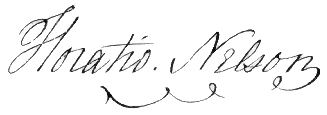
Lord Nelson who turned 250 last month composed his final act on paper onboard H.M.S. Victory in the early morning hours before the Battle of Trafalgar, 21st October 1805:

HoratioNelson1May the Great God, whom I worship, grant to my Country, and for the benefit of Europe in general, a great and glorious Victory; and may no misconduct in any one tarnish it; and may humanity after Victory be the predominant feature in the British Fleet. For myself, individually, I commit my life to Him who made me, and may his blessing light upon my endeavours for serving my Country faithfully. To Him I resign myself and the just cause which is entrusted to me to defend. Amen. Amen. Amen.


Read the full article >>

Monday, 20 October 2008

Protect the King at all costs

What's that old metaphor, that monarchy is akin to a political game of chess. Kings and Queens are like chess pieces, known not for the power they represent but the power they deny others. I quite like the way the Pons, Bishops, Knights and Horses swallow the enemy in this match. Enjoy!


Read the full article >>

Friday, 10 October 2008

The Queen's Gazillionth Investiture

Insight%20oct08%20gallery%20invest%20largeHer Majesty holds yet another Investiture in the Ballroom at Buckingham Palace, 10 October 2008. On duty at the ceremony are members of The Queen's Body Guard of the Yeomen of the Guard, which was created by Henry VII in 1485.
© Press Association


Read the full article >>

Thursday, 9 October 2008

The Lieutenant Governor of Quebec

The Lieutenant Governor of Quebec, The Hon. Pierre Duchesne, is received by The Queen at Buckingham Palace, 9 October 2008. His Excellency was accompanied at the audience by Madame Ginette Lamoureux.

Insight%20oct08%20gallery%20quebec%20largeThe Queen hands the Letters of Credence of the Lebanese Ambassador, right, to Sir Peter Ricketts, Permanent Under-Secretary of State for Foreign and Commonwealth Affairs, during an audience at Buckingham Palace, 9 October 2008.

Insight%20oct08%20gallery%20lebanon%20largeSir Peter is responsible for the management of the Foreign and Commonwealth Office in London and British Embassies and High Commissions in 144 countries around the world.


Read the full article >>

Wednesday, 8 October 2008

The Gods of the Copybook Headings

Then the Gods of the Market tumbled, and their smooth-tongued wizards withdrew...

A copybook was an exercise book used by school children to practice their handwriting in. The pages were blank except for horizontal rulings and a printed specimen of perfect handwriting at the top that students were supposed to copy all down the page. The specimens were proverbs or quotations, or little commonplace sayings designed to inculcate the young with the wisdom and truth of the ages. These were the copybook headings.

Kipling's poem, The Gods of the Copybook Headings, talks of the enduring nature of those old wise sayings, and the cruel lessons they instill when the march of progress falters and the marketplace of trends and fads and fashionable thinking fails to heed the gospel of old fashioned common sense.

copybook headingsAS I PASS through my incarnations in every age and race,
I make my proper prostrations to the Gods of the Market Place.
Peering through reverent fingers I watch them flourish and fall,
And the Gods of the Copybook Headings, I notice, outlast them all.

We were living in trees when they met us. They showed us each in turn
That Water would certainly wet us, as Fire would certainly burn:
But we found them lacking in Uplift, Vision and Breadth of Mind,
So we left them to teach the Gorillas while we followed the March of Mankind.

We moved as the Spirit listed. They never altered their pace,
Being neither cloud nor wind-borne like the Gods of the Market Place.
But they always caught up with our progress, and presently word would come
That a tribe had been wiped off its icefield, or the lights had gone out in Rome.

With the Hopes that our World is built on they were utterly out of touch
They denied that the Moon was Stilton; they denied she was even Dutch
They denied that Wishes were Horses; they denied that a Pig had Wings.
So we worshipped the Gods of the Market Who promised these beautiful things.

When the Cambrian measures were forming, They promised perpetual peace.
They swore, if we gave them our weapons, that the wars of the tribes would cease.
But when we disarmed They sold us and delivered us bound to our foe,
And the Gods of the Copybook Heading said: "Stick to the Devil you know."

On the first Feminian Sandstones we were promised the Fuller Life
(Which started by loving our neighbour and ended by loving his wife)
Till our women had no more children and the men lost reason and faith,
And the Gods of the Copybook Headings said: "The Wages of Sin is Death."

In the Carboniferous Epoch we were promised abundance for all,
By robbing selected Peter to pay for collective Paul;
But, though we had plenty of money, there was nothing our money could buy,
And the Gods of the Copybook Headings said: "If you don't work you die."

Then the Gods of the Market tumbled, and their smooth-tongued wizards withdrew
And the hearts of the meanest were humbled and began to believe it was true
That All is not Gold that Glitters, and Two and Two make Four
And the Gods of the Copybook Headings limped up to explain it once more.

* * * * *

AS IT WILL BE in the future, it was at the birth of Man
There are only four things certain since Social Progress began.
That the Dog returns to his Vomit and the Sow returns to her Mire,
And the burnt Fool's bandaged finger goes wabbling back to the Fire;

And that after this is accomplished, and the brave new world begins
When all men are paid for existing and no man must pay for his sins
As surely as Water will wet us, as surely as Fire will burn
The Gods of the Copybook Headings with terror and slaughter return!

— Rudyard Kipling, October 1919


Read the full article >>

Sunday, 5 October 2008

Atheists are like snowmen that don’t believe in the sun. Good luck.

THAT IS THE IMPORT OF DOUGLAS WILSON'S upcoming work, Heaven Misplaced: Christ's Kingdom on Earth (Canon, 2008). I do not like it. It is not very likeable. (Though I like the snowman implication, even if it is not his image). And yet I think it speaks the Truth; for, honestly, before reading it I vehemently disagreed with his side of the debate, and after reading it I vehemently disagreed with his side of the debate. And then time passed, my Christian life went on as before, and at numerous moments I found his case - at times very sloppily argued here - plainly made much greater sense of Holy Scripture, and much less of an ass out of the reader of Holy Scripture, and contributed much greater glory to the Lord of Hosts that I have quite unconsciously and unzealously, but I think irrevocably, adopted it. (Though not quite to the fullest extent). That said, this book does remain at times infuriating, and may not be the best method of introducing it to others.

The debate is apocalyptic. It is about how the world will end. Atheists are like snowmen that don’t believe in the sun, because Christ - argues Wilson - will do exactly what we celebrate he will do at Christmas-time, with all that talk and carolling of epochal change, hope consummated, peace on Earth and goodwill amongst Men. “[T]he gospel will continue to grow and flourish throughout the world, more and more individuals will be converted, the nations will stream to Christ, and the Great Commission will finally be successfully completed … And then the end will come”. The sun, as he has elsewhere put it, has risen - because the Son has risen - and as it climbs the sky, whilst at first near-imperceptible dawn, it will at last become undeniable noon. It will get harder and harder to not believe, as the Holy Spirit goes to work, and the sinful world is subdued to serve the risen Lord.

Beneath the "fold" of this post, if you will, lies a serious review of the book, so I warn all those who hated my previous posts on this man and his work to acquire a handful of clothes pegs and suitably attach them to their face in advance; and gratify you by reiterating the fact that this is of course the third and last, and much delayed, such meditation.


AS WILSON POINTS OUT, this is not exactly the majority view amongst the faithful. For most, “the world is God’s Vietnam, and the return of Christ consists of the few lucky ones [getting] helicoptered off a roof during the fall of Saigon”. Some of his arguments, however, are better than others at attempting to persuade said faithful to switch sides. And that Vietnam remark - which made me chuckle at first (for it’s fairly accurate) - will come back to haunt him.

It is perhaps fairest to put his best ones forward first.

1) It is promised. The scriptures he arranges and explicates for this are many, and heart-warming, but can be summed up with the famous greatness of Isaiah 11:6-10.

6The wolf also shall dwell with the lamb, and the leopard shall lie down with the kid; and the calf and the young lion and the fatling together; and a little child shall lead them.

7And the cow and the bear shall feed; their young ones shall lie down together: and the lion shall eat straw like the ox.

8And the sucking child shall play on the hole of the asp, and the weaned child shall put his hand on the cockatrice' den.

9They shall not hurt nor destroy in all my holy mountain: for the earth shall be full of the knowledge of the LORD, as the waters cover the sea.

10And in that day there shall be a root of Jesse, which shall stand for an ensign of the people; to it shall the Gentiles seek: and his rest shall be glorious.


Matthew 28:18 and 1 Corinthians 15:25-26 are great reinforcements too. He quite rightly points out that all these seem “so over the top that most Christians just relegate [them] to some time after the Lord comes again. That is the only way they can see that a fulfilment could ever be possible”. But scripture does not allow us to do that. The irresistible fact is, for instance, that St Paul quotes that Isaiah passage in his epistle to the Romans, “as a justification for his preaching to the Gentiles”. (See Romans 15:12)

That is, now is the time of fulfilment! The Christian era - with its pastors, apostles, evangelists - is pre-eminently the slow achievement of this Isaiah prophecy, all thanks to the surpassing grace of our Lord Jesus Christ and the Father of Mercies and the work of the Holy Ghost. Slow, perhaps, maybe achingly at times, and with reversals - and from our time now, where it is surely not more than half-done, difficult to think of how it might practically be achieved - but steadily advancing - and it will at last have the most glorious promised victory. Here is some wind for our sails, and oil for our lamps!

Either we believe this or we don’t. I couldn’t at first. It is natural, perhaps - for utopian (not to say Christian socialist) bunk about the reformation of human nature, the establishing of heaven on earth in five years’ time, etc, etc, belongs squarely in the gutter of history, whence valiant men have spent numerous centuries punching it. But these are pagan aspirations and should not of a right bar us from thoughts that only at first sound similar; just as we surely do not think the greasy hypocritical Televangelist denies the possibility of true earnest faithful men.

We should remember how much better things have been before, when Christianity was much more widely diffused in our country. The nation was not righteous and religious in all things by fiat and theocrat, but by inclination. Church spires rose everywhere; novelists like Trollope did all they could to “bring every thought” of their public “captive into obedience with Christ” (just read his justifications in that resplendent Autobiography to see what I mean); and men wrote in the floor of the Houses of Parliament that “Except the LORD build the house, they labour in vain that build it: except the LORD keep the city, the watchman waketh but in vain.” (Psalm 127:1, AV). So I think a quiet faith, sensible of this hope, and modestly acknowledging that it will take many generations before it is accomplished - and we are perchance still, in the long run, the early church - is quite consistent and normal with a clear-eyed conservative view of the facts of fallen mankind. It will come by the hand of God, not man. The fact of a small band of Jewish ‘heretics’ spreading their faith the wide world o’er, conquering the hearts of every kind of nation and people … in but two millennia, and it still being the largest faith, and the fastest growing, is supportive evidence enough for me. It is in the hands of the Lord. The rest coming true is no less improbable than what has happened so far. Soli Deo Gloria. And such Gloria!

2) It is lovely. He includes a basic gospel exposition spread over numerous chapters, rejoicing warmly in the well-known elements, but adding this perspective and so rejoicing even more warmly; repeating what we know, and adding what we have not seen, thereby in many respects putting the ‘good’ back in ‘good news’. I would have liked this to be more organised and explicit about what it is doing (because it is unannounced, and leaves the main thread hanging, it feels slightly awkward). But it is all very good.

3) He also excellently tidies up both Christ’s promise that he would return before “this generation passes away”, and the Book of Revelations. For the former, he notes, it must refer to an act of God, involving his Son, that happened before that generation passed away. He marshals a superb case for AD70 and the destruction of the Temple, with the establishing of the Church as New Jerusalem, fitting the bill; and does so in a way which ineluctably glorifies the Lord, for it was a major prophecy, made by him, and majorly fulfilled.

As for the latter, long the site of bewildering, appalling exegeses, he calmly and logically explains its various tropes as being met both in the gospel story itself and the first century. This does not deny it can be read in terms of what may happen in the future. It is not scripturally fallow and spent, having been fulfilled (though hatefully Wilson does not help the reader avoid that idea, which comes naturally). History, being the sum of the paths of men and the will of God, will repeat in many ways. Its principles hold. Revelations is a vivid kind of allegory of the gospel conquest; and so of course must have many future applications, as well as comforting properties, and all thankfully shorn of the trembling jowls and panic of the would-be prophet, seeing helicopters in scorpions or writing badly-written heresy.

ALL OF THESE ARGUMENTS, and the whole book itself, have the immense value of imparting a key and overdue change in the general Christian posture. It is a cause for standing up straight, when many are crabbed and crouched.

Many modern Christians suffer from a strange weakness of belief. In our portion of the globe Christendom is in disarray; you might even be tempted to think the Cross totters (but it stands forever); and there comes upon the mind of men a strange disposal to thinking, whether consciously or not, of God as small and troubled (or else big and a kind of pimp for prosperity; that is, in fact, equally small). Both such wild diversions have the same thing in common: lack of a long-term perspective in which Christ's victory is a victory of the kind he talks of, and like all real victories, one in which we get to enjoy some true peace (of the kind he talks of). One believes the peace will come in some vague sense which is so vague it is as much as saying 'not at all'; the other believes it must have come already, and therefore must mean something like free Ferraris. And there are simply too many people, too, who, shorn of this perspective, look about and believe that Satan is the ruler of this world still; are more willing to ascribe omnipresence, omniscience and infinity to him, in warning us of his demoniac ways, than they are to bless the name of God; but “Now is the judgment of this world: now shall the prince of this world be cast out" (John 12:31, AV). The world, the flesh, and the devil are thorns in our sides - and we sometimes seem to live in a landscape comprised entirely of cacti - but to magnify such thorns, and not the fruits of that fateful thorn, the spear slung in the side of Christ, whence “blood and water” sprang, and all that means, is utterly and everlastingly perverse.

This mistake affects everything from our childish liturgy and worship, to our measly preaching and enervated evangelism. It is no wonder that the best we can do, for a God whose infinite sovereignty, victory and glory - and explicit Word - we profoundly (sometimes unawares) doubt, is pathetic and half-hearted. We are the most tentative fishers of men known in history; and think that, to catch a man, a few tables of interesting literature, perhaps a fantasy novel full of whizz-bang allegory, maybe 'living a life that provokes questions' (zzzz) will do the trick; but we forget that we follow in the stead of a man who made such a catch of fish the nets overflowed. The expectations are different - or ought to be. The methods are, as with the fish, as with the men, His Word.

The new posture, argues Wilson, (without admittedly stating the kind of opinions above) is the old posture and message of Paul: one that
“topples the princes of this world, and everything that previously had been under their jurisdiction, and this mean[s] the arts, politics, education, scientific investigation, building fences, cooking, and anything else that men might do. Rightly understood, preaching Christ and Him crucified is as broad as the world … In thinking about the greatness of the Great Commission, you do not ever have to worry about overdoing it”
. My cynicism rebelled at this at first; maybe yours will too; but it strikes me now that to not have faith in this, when men have had much fruitful faith in it in the past, is tragic and unnecessary.

NOW THE BAD THINGS.

The first problem is that he doesn’t elaborate his arguments against probable objections. He expresses a wish in his introduction to make it congenial and sympathetic to us, by presenting it simply and straightforwardly; but he really should have done some defensive work as he went. Misunderstandings and unnecessary opposition are provoked on nearly every page in a work like this - that is, one attempting to supplant another devoutly held view. Most Christians don’t just simply believe something else; along with that, they are naturally suspicious of opposing claims. As it happens, Wilson’s opposing claim has many historical antecedents to comfort the sceptic (I think Jonathan Edwards, for instance, would have been very sympathetic). But it is only through serious patience and charity not of my own resources that I have not simply set fire to the manuscript at times. In his introduction he tries to wriggle out of this important job by saying skeptics should relax and just try and imaginatively appreciate his vision. This is all well and good: by the imagination has an opinion too; it's why novels have morals.

Along with this goes his propensity for slaying straw-men. He slaughters whole armies of scarecrows in defence of his arguments, but does not allay genuine concerns. Why, for instance, detect and destroy the notion in opponents that “human history is basically all the same … Things go on pretty much as they have always done … the resurrection being a completely anomalous event in an otherwise unchanged world”. This from the writer who, a paragraph previously, wrote that the “resurrection was one small, tiny part of the general resurrection to come”. Who is it truly with a warped sense of the resurrection’s importance? Surely if it is numerically a tiny part of the general resurrection, it still remains vast and central; the first fruits and so the very seeds of all the rest.

It would be boring to go through all the rest in as much detail; the worst though must be put down. And God's Vietnam is probably the worst. For he rightly - but belatedly, in a brief passage, by-the-by, almost at the end - stresses that if this view is not like the more popular view in thinking of this world as being God's Vietnam, it is only really the ending they disagree over. There will still be suffering for Christ; there will still be death for Christ; the road, as he puts it, lies through the cross. It will be a heavy task, and there lies in many veins saintly blood that must be spilled to win it. It is no easy thing. This is quite right. This is terribly important, especially to keep the reader from mistakenly thinking he is preaching anything contrary to the tribulation, suffering, labour - and weight of glory - that is at the heart of orthodox Christianity. But for the amount of words and passion he expends on this, it sounds about as troubling as a mosquito bite.

The last problem is a great deal of muddled obscurity in the writing. The whole thing feels hazy at times; some of it makes a very infuriating semi-sense, and has to be very generously interpreted to be anything other than idiotic or meaningless. He begins vigorously enough, but soon is wibbling and digressing and floating free. It is most un-Wilson-like.

E.g. after much diversion from his central matter, he states that Christ as judge “is the resurrected victim of a judicially-rigged murder. Christ is returning, and He is returning with deliverance from the old ways of death disguised as ‘justice’”. Right. What? This I can only take to mean a deliverance from the Law - in which we were dead, with the semblance or ambition of righteousness or “justice”, and into Grace, where it truly is found and accomplished. In other words, but a classic point of the New Testament… But it comes across as a random disquisition against capital punishment. Time would fail me to tell of the idiocy of such lines as “Salvation of the world doesn’t mean salvation of each and every person. But it does mean salvation of the world.” At one point he says that America needs a saviour, and Christ is a saviour, "therefore the nation will be saved". That seems to me one of the largest non sequiturs ever committed to the page. And it is lousy stuff to say we must let NT writers tell us how to treat OT texts, and then reverse this a few chapters later (i.e. don't make rather arbitrary rules, only to contradict them). Similar sillinesses abound. I am not sure why. It does not meet Wilson’s usual standards. It is gravely disappointing.

Heaven Misplaced also has a rather digressive, disorganised, torrential organisation - chapters leaking every which way, making irrelevant points, or too many points, or impertinent points - which makes me suspect, alongside all these issues, that it is a touched-up transcript of a talk or lecture series. There is nothing wrong with this. But they haven’t been touched up enough.

ANYWAY. It makes its points. And they are agreeable. They are not at all essential. He does not make them irresistible. I can think of many points where his interpretation of scripture need not be the only one. But it is the more convincing one. And, as I said, the picture, when you have internalised it, fits so smartly, glorifies so largely, and inspires so lastingly, that I am strongly inclined towards it. This is not a very good basis for belief if it is merely (as he unadvisedly says it can be) simply because it is excellent if true. It fits smartly. That’s important.


And at the heart, I feel, of this instinctive opposition to his arguing it will all literally, specifically, in human history come true, is the fact that at our historical moment it seems so unlikely. Yet I dare not say it is impossible. It warms the heart. The Holy Spirit can do all things; has done so much already; in less than half a century he has, for instance, called more than 100 million Chinese out of darkness and into his everlasting light. This is a miracle of astonishing proportions. So to the men and women of far futurity, faithful once more, the glory of the Lord abiding in their hearts, and the Lord ever glorified in their lands, able to read this from Google v. 509, I bid you a hello from a true Dark Age!

Heaven Misplaced is due for release on December 16th, and shall be available from CanonPress.org


Read the full article >>

Thursday, 2 October 2008

Old Man's Day

An old village custom in the civil parish of Braughing, Hertfordshire, England.

artblog-23-old-man-rembrandt-large-smkOn 2nd October 1571, a young farmer by the name of Matthew Wall, from the hamlet of Braughing in Hertfordshire, England apparently died just before his wedding. As the funeral bell was being tolled, the coffin was carried down Fleece Lane towards the village Church of St Mary the Virgin.

Matthew's fiancée and other mourners were deeply distressed. He was only a young man. As they made their way to the funeral service, one of the pallbearers slipped on the damp autumn leaves and they dropped the coffin - waking young Matthew, from what was simply a deep sleep. Confused and wondering wherever he was, he began frantically hitting the inside of the wooden case with his fist. The mourners removed the lid and were overjoyed to find him alive and well.

Matthew had been in a coma and had been suffering from what is believed to be a form of epilepsy. A year after this strange event he married his beautiful fiancée and lived many more years. When eventually he did die in 1595, his will made financial provision for Fleece Lane to be swept each year, after which the funeral bell, and then a wedding peal, were to be rung. The money, invested in Braughing Parish Charities also paid for his grave to be pegged with brambles to prevent grazing sheep from damaging it.

The 2nd October is, to this very day, known as Old Man's Day. The tradition still continues and schoolchildren now sweep the leaves from the lane, the bells are rung, and a short service is held at Matthew Wall's graveside.


Read the full article >>

Monday, 29 September 2008

The Immortal Memory of Lord Nelson

Happy Birthday to Lord Viscount Horatio Nelson, Vice Admiral of the White, England's greatest hero born 250 years ago today.

ON THE 29TH SEPTEMBER 1758, the sixth child of Reverend Edmund and Catherine Nelson was born in Burnham Thorpe, Norfolk. This child would grow up to be the most famous hero in British naval and imperial history.

HoratioNelson1On leaving England for the last time to take up his station as Commander-in-Chief of the Mediterranean Fleet, the most prestigious command of the Royal Navy at that time, he wrote in his private journal, 13th September 1805:

The national emergency continuing, and the Combined Fleets of France and Spain having united and taken refuge in Cadiz, I have now been prevailed upon by the Prime Minister and all the Chief Officers of the State, to take command of a special force intended for their destruction. Friday night (Sept. 13), at half-past ten, I drove from dear, dear Merton; where I left all which I hold dear in this world, to go and serve my king and country.

May the great GOD, whom I adore, enable me to fulfil the expectations of my country! and if it is His good pleasure that I should return, my thanks will never cease being offered up to the throne of His mercy. If it is His good providence to cut short my days upon earth, I bow with the greatest submission; relying that he will protect those so dear to me whom I may leave behind! His will be done. Amen! Amen! Amen!


And what today would be considered another shocking piece of religious and patriotic puffery, Lord Nelson composed his final act on paper in his nightcabin in the early morning hours before the Battle of Trafalgar, 21st October 1805:

May the Great God, whom I worship, grant to my Country, and for the benefit of Europe in general, a great and glorious Victory; and may no misconduct in any one tarnish it; and may humanity after Victory be the predominant feature in the British Fleet. For myself, individually, I commit my life to Him who made me, and may his blessing light upon my endeavours for serving my Country faithfully. To Him I resign myself and the just cause which is entrusted to me to defend. Amen. Amen. Amen.


Read the full article >>

Saturday, 27 September 2008

Dominion Day in New Zealand

Dominion Day is the name given to 26 September, the anniversary of the day New Zealand was granted dominion status within the British Empire in 1907. Elder Dominion Canada, which achieved similar status in 1867, looks on affectionately as a kind of older brother: "Rather large for him, is it not?" Fellow brother Australia snarks: "Oh, his head is swelling rapidly. The hat will soon fit!"

dominion-day-cartoon_0No longer a statutory (bank) holiday, the only current official observance of the day is as a Provincial Anniversary Day in South Canterbury. There is support in some quarters for the day to be revived as an alternative New Zealand Day, instead of renaming Waitangi Day, New Zealand's current national day.


Read the full article >>

Friday, 26 September 2008

Changing the Guard

The Band of the Grenadier Guards takes part in the Changing the Guard ceremony at Buckingham Palace, 26 September 2008.

Insight%20sep08%20gallery%20guard%20largeThe Band and soldiers involved in Guard Mounting are drawn from one of the five regiments of Foot Guards in the British Army: the Scots Guards, the Irish Guards, the Welsh Guards, the Grenadier Guards and the Coldstream Guards.


Read the full article >>

Monday, 22 September 2008

Battle of Britain Remembered

Insight%20sep08%20gallery%20battle%20largeThe Prince of Wales talks to Battle of Britain veteran, Wing Commander Tom Neil and his wife Eileen, at a Reception at Westminster Abbey following a Service of Thanksgiving and Rededication, 21 September, 2008. The Prince, who was accompanied by The Duchess of Cornwall, is Patron of the Battle of Britain Fighter Association.

See here for the Surviving Few of Battle of Britain Royal Air Force Fighter Command. I can't help but notice the Canucks, Aussies and New Zealanders still on that most distinguished of lists.

***

"We do not want to be remembered as heroes, we only ask to be remembered for what we done....that's all"
W/C Robert "Bob" Doe British 234 & 238 Squadrons Fighter Command

"I regard it as a privilege to fight for all those things that make life worth living - freedom, honour and fair play"
Pilot Officer William "Bill" Millington Australian 79 & 249 Squadrons Fighter Command


Read the full article >>

Sunday, 21 September 2008

Gentlemen, charge your glasses

The Warner has the latest revelation on our Grand Old Duke: "Apparently some Downing Street pondlife were attempting to hijack the funeral of Diana, Princess of Wales and, in particular, to dictate the roles of Princes William and Harry, in their customary exploitative way. Down the speakerphone from Balmoral thundered a classic Philippic: "**** off."" There is a time and place to convey our more rudimentary instincts, even for a prince, a duke and a royal consort. This was one of them.

philip2ES2610_468x399


Read the full article >>

Friday, 19 September 2008

Argument 5: Armed Forces

Republicanism would destroy the regimental heritage and traditional esprit-de-corps of our armed forces. We must not let that happen.

Military Sphere: Her Majesty as "Commander-in-Chief"
Relevant Quote: "But what are kings, when regiment is gone, But perfect shadows in a sunshine day?" - Christopher Marlowe
Related Concepts: The Queen's Regiments, Her Majesty's Ships, King and Country

guard-cds2WE SHALL FIGHT THEM ON THE BEACHES. What's honestly better, the Tasmanian Republican Guard or the Royal Australian Regiment? 'Soldiers Canada' or the famed Princess Patricia’s Canadian Light Infantry? Numbered British battalions of the European Rapid Reaction Force or the King’s Royal Hussars and the Prince of Wales Royal Lancers? How about Queen Alexandra's Mounted Rifles in New Zealand, the Royal Canadian Dragoons, the Queen's York Rangers and the Duke of Connaught's Own? Is it really goodbye to the Blues and Royals, the Royal Horse Artillery, the King's Own Calgary Regiment and the Queensland Mounted Infantry?... Get real, republicanos, regiment is family sacred to the serving soldier. Our royal heritage and regimental system is the whole basis and backbone of military pride and morale.

Removing the Crown from the armed forces may seem like a simple enough task, so long as you don't give a flying fig about military morale. So long as you don't give one piddle whiff for the esprit-de-corps of our fighting men and women, sure go ahead and dispense with the Queen's commission, decommission Her Majesty's Ships, retire the Queen's colours and surrender every regiment's battle honours. Don't worry that some regiments go back hundreds of years, they won't mind the blow torch, good soldiers will always do what they are told.

Many regiments do have very long histories, often going back for centuries; the oldest British regiment still in existence is the Honourable Artillery Company, established in 1537. The Royal Scots, formed in 1633, was the oldest infantry regiment until just recently when it was folded into the Royal Regiment of Scotland, now the Black Watch and all of the historical Highland regiments are combined under one amalgamated family. Talk about a terrible, terrible blow to regimental pride. Mind you, that's probably a relatively minor reform compared to what waits in store if the republicans ever get hold of the keys to the local armouries.

Commonwealth-style regiments have proven their worth throughout history in war and through lengthy and difficult policing missions. Regiments recruited from areas of political ferment (such as Scotland, Wales, Ireland, Quebec, India, etc.), tend to perform particularly well because of the loyalty their members exhibit to the regiments.

It is worth noting that in countries where regimental loyalty thrives - the core Anglosphere nations predominantly - those nations have never suffered a military coup, or even seriously faced the prospect of one, which can be attributed in part to the "tribal" nature of the regimental system, which makes it nearly impossible for a charismatic leader to command the loyalty of the entire army. History shows it is healthier to develop soldiers' loyalty to their regiment, than to the military in general. It is usually Her Majesty's position as regimental colonel-in-chief that engenders the closest loyalty, rather than the Queen's high station as overall commander-in-chief of the armed forces.

So hands off our regiments. OUT OF OUR COLD DEAD HANDS.


Read the full article >>

Tuesday, 16 September 2008

Australian republicans should put away the Champagne and the Chardonnay

Prime Minister Rudd calls for bi-partisan support on a new Australian republic, now that Malcolm Turnbull, leader of the republican side in the 1999 referendum, is leader of Her Majesty's Loyal Opposition in Oz. Can you say, wishful thinking?

r206663_788081The thing is, the membership of the Liberal Party, which Mr. Turnbull now leads, is still predominantly monarchist. David Flint, leader of Australians for Constitutional Monarchy, is onto the new reality in a big way Down Under (the bold are mine):
_____

"The accession of Malcolm Turnbull to the leadership of the Liberal Party, and thus of the Opposition, does not mean that the Constitution will soon be changed.

Mr Turnbull has made it very clear that the any move against that integral part of our constitutional system, the Australian Crown, is unlikely unless three conditions are fulfilled.

First, it cannot take place during the present reign.

Second there must be a consensus among republicans on the model. But almost a decade after the 1999 referendum, such a consensus is not even close.

Third the opposition must be minimal.


Opposition will be at least as great as in 1999, when over 50,000 volunteers worked to defeat that model.

There is one other matter. Mr. Turnbull is categorically opposed to the direct election of a president.

He is a very conservative republican.

The republican movement should put away their champagne, or indeed their chardonnay. They have nothing to celebrate in the fact that Mr Turnbull is now Her Majesty's Leader of Australia's Loyal Opposition.

This will in no way accelerate their agenda."
_____


Read the full article >>

Sunday, 14 September 2008

Argument 4: Pomp and Ceremony

When it comes to elevated spectacle, the republicans are hopelessly out of their depth.

The Aesthetic Sphere: The lares, penates, processions, titles, ranks and relics of our symbolic Crown hollow the ordinary and lift us from the drudgery of the humdrum.
Relevant Quote: "If your job is to leaven ordinary lives with elevating spectacle, be elevating or be gone." - George F. Will
Related Concepts: Pomp, Pageantry, Patriotism, Circumstance, Heraldry, Ritual, Grandeur, Splendour, Trappings, Symbols.
Previous Posts: In Defence of Pomp; The Decent Draperies of Life; From Honours to Merit Badges

t4_679087nWHEN IT COMES TO ELEVATED SPECTACLE, the only ritual the republicans are any good at is Beating the Retreat. What is their response to this argument, I wonder; that ceremony doesn't matter; that they don't like pomp and pageantry and parades; that knighthoods are uninteresting hangovers; that they don't much care for grandeur in the monarchist mold, because in their opinion the presidential kind is - ahem - superior? Or is it rather that they enjoy the spectacle as much as anyone else, and would seek to preserve as much of it as possible?

Because when it comes to comparing the binding, defining and inspiring power of the institutions of Great Britain, power that is indissolubly linked with the pomp and ceremony of the British Crown, and its associated grandeur, history, honours, titles and ranks; with the embryonic institutions of a shiny new republic, which is without history and devoid of any intrinsic meaning or merit, and which explicitly reject the ties that bind them to their predecessors and counterparts; republicans are dead in the water, and they know it.

Perhaps that is why some have whispered in favour of restoring knighthoods! I have never understood this inclination by some who desire to see the backside of monarchy but want to keep its colours, who don't mind holding onto the titles, heraldry and processions of our inheritance that have been operative throughout our history, yet would gladly see the Royal connection disappear.

This is a critical point, for if the fact and ceremony of the historical and, particularly, the Royal associations are removed and alienated from these institutions, honours and privileges; they shall cease to have the same fundamental meaning and force, and sense of honour, symbolism and gravitas. Removal of the Royal would have the most undesirable consequences, in terms of a dilution of the impact and intrinsic power, merit and meaning imputed to their continued existence.

The bottom line is that monarchy offers a more attractive presentation of state. Receiving a knighthood is a real honour. Trooping the Colour and Changing the Guard are fascinating spectacles. The swearing-in of a new governor-general is a simple, moving and dignified ceremony, there is no preaching from the pulpit, just the steady grace of an impartial Crown. And the investiture of a new monarch can be a once-in-a-lifetime overtly religious experience, though mass secularisation and democratisation will no doubt make future coronations a less powerful visual expression than in the past, if they are not eventually discarded altogether. One wonders if we are headed for banality whether we choose to or not.


Read the full article >>

Saturday, 13 September 2008

Victoria Cross and George Cross Association

Insight%20sep08%20gallery%20vcx%20largeThe Prince of Wales and The Duchess of Cornwall with holders of the Victoria Cross and the George Cross at St. James's Palace prior to a Reception given by Their Royal Highnesses for the Victoria Cross and George Cross Association, 9 September 2008. The Royal couple had earlier attended a Reunion Service for the Association, of which The Prince is President, at St. Martin-in-the-Fields.
© Press Association


Read the full article >>

Wednesday, 10 September 2008

Argument 3: A Better Democracy

The truth about "choice" and power. Republicans contend that choosing a president would yield a more fair and more representative head of state. Nothing could be further from the truth.

The Political Sphere: Her Majesty as a non-partisan, non-ambitious sovereign of state and "Queen-in-Parliament" remains beyond politics and above the stray.
Relevant Quote: "Those who imagine that a politician would make a better figurehead than a hereditary monarch might perhaps make the acquaintance of more politicians." - Baroness Thatcher, 1995
Related Concepts: Democracy, Power, Parliament, Government, Justice

pathe_queen_fKris says that monarchists need to defend the monarchy as a better system in itself, rather than merely arguing from tradition. While I agree with every word of Beaverbrook's previous post, for my first effort as a member of this distinguished team I will try to rise to the challenge. After all, if "tradition," much as I love it, were my only argument, I could hardly argue for the restoration of relatively recently created monarchies such as those of the Balkans, nor could I despise the 137-year-old French Republic, which arguably has become a tradition in itself.

As a monarchist who has lived in the United States my entire life, I am always baffled by the claim that republicanism gives ordinary people like me "a say in who should represent our nation." I never voted for George W. Bush, yet he is my head of state. I have no intention of voting for either John McCain or Barack Obama, since as an antiwar right-winger I find the policies of both repugnant, yet one of them will be my head of state whether I like it or not, every bit as much as the Queen is Kris's head of state whether he likes it or not. Why should the fact that other people do support these men be any comfort to those of us who do not? What kind of "choice" is this? I would much rather have a head of state who no one chose, like Queen Elizabeth, than a head of state chosen and supported by others but not by me. Which is more truly fair? Which is more truly representative? An elected president is inevitably more representative of those who voted for him than of those who did not. It is precisely because the Queen represents no one faction (unless the 80% of British people who still support the monarchy are counted as a "faction," in which case that is still a far larger portion of the "electorate" than any one politician could command) that she is more representative of the whole country than a president could possibly be.

I would find it easier to submit to one man (or woman) who had no more say in the matter than I did, than to submit to a majority of the general public. Republicans claim it is unfair to be unable to hold a "bad" king or prince accountable. But it is far more difficult to hold a "bad" electorate accountable! And I have more confidence that the genetic lottery might produce decent leadership than in the wisdom of the majority of voters. As the great French monarchist Charles Maurras (an atheist) put it, "For monarchy to work, one man must be wise. For democracy to work, a majority of the people must be wise. Which is more likely?"

In anticipation of the objection that Maurras's argument could also be a defense of dictatorship, it is a crucial ingredient that the monarch did not choose his or her position. For if power tends to corrupt, than surely it is more dangerous to entrust it to the sort of person who has spent most of his life seeking it than to someone who has not sought it at all. Republicans who offer monarchists the opportunity to vote for "Liz" if that is what we want miss the point entirely. While I think that the Queen is an admirable woman, this is not fundamentally why I, or any other serious monarchist, support the monarchy. I would support the monarchy even if I were, for example, a Belgian living under King Leopold II (probably one of the least likable monarchs of modern times). We do not want to vote for Elizabeth or Charles or William or anyone else. We support the Queen not only precisely because we did not vote for her, but because she did not run. It is not necessarily "Elizabeth Windsor" and her descendants per se that we want, but a head of state who has not come to power through the inherently divisive, controversial, and fallible process of elections; a head of state who has never chosen to seek that office, who has never campaigned, who has never made us promises unlikely to be kept in exchange for votes. And no republic can ever offer us that, and no monarchist will ever be able to regard a republic built on the ashes of a monarchy with anything other than loathing and alienation.

Republicans, when addressing those of us familiar with actual republics, waste their time when dangling the allegedly tantalizing prospect of a vote for head of state in front of us, for I have had such a "right" since turning 18 twelve years ago and it means nothing to me. It is not elections and presidents that fascinate and attract me, but the gloriously complex and delightfully capricious web of royal genealogy and history. One of the many things I love about hereditary monarchy is the way it opens up the "field" to men (and women!) whose temperaments and personalities are such that they would never win an election, but when the highest office of the land is thrust upon them by Fate nevertheless are able to make valuable contributions to their countries. Think, for example, of King Ludwig II of Bavaria. It's impossible to imagine such an eccentric individual rising to power in any kind of republic, even before he (allegedly) began to show signs of mental illness. But what is his legacy? The operas of Wagner (which probably could never have been completed without his assistance), and some of Germany's most popular and enchanting tourist attractions. Between the relatively bland and colourless politicians of modern Europe and romantic, intriguing figures that leap off the pages of history like King Ludwig, there is no comparison. How can anyone be content with the former? Give me a Ludwig II, with all his foibles, over whichever boring faceless commoner is running Bavaria these days any day.

So no, I do not want this alleged "benefit" of republicanism, I do not want this vastly overrated "right to vote" for my head of state, for the mere existence of this "right" denies leadership to anyone not suited to victory in the democratic process, and as such a person myself, it is this kind of discrimination, this kind of exclusion, that I find intolerable! Only in a hereditary monarchy can people like me, who cannot imagine themselves winning an election, let alone seizing power in a coup, but can certainly relate to simply being born, be truly represented. Seen in this light, it is ironically monarchy that is the fairest and most truly "equal" system of all!

Finally, rather than simply continuing to repeat and elaborate upon arguments I've already made in the past, I'd like to provide links to two previous articles of mine, both of which make entirely secular cases for monarchy: Why I am a Monarchist (1999) and A Case for Traditional Monarchy (2002).


Read the full article >>

Tuesday, 9 September 2008

Argument 2: Tradition and Continuity

Tradition is reason with a root. Our ancestors did not randomly associate in political arrangements. Our parliamentary system, our moral and legal codes are the result of thousands of years of distilled experience.

The Civil Sphere: The Crown is a living link between past and present and a symbol of the eternal. As our anchor, it is one of The Permanent Things.
Related Concepts: Tradition, History, Rootedness, Gravitas, Connection, Experience
Previous Posts: Why Monarchy? Why Tradition?; The proper role of tradition in Civil Society

vTRADITION IS REASON WITH A ROOT. "The mark of insanity", wrote Chesterton, "is reason without a root, reason in a void." Rootedness in turn is the basis for gravitas and long organic experience, our standing ground against transient ideological fashion and a present-tense culture in which individualism and relativism hold sway. To turn a phrase on Paine, the churlish and persistent calls to "grow up" and dismantle the monarchy, to wilfully abandon our heritage and the institutions built by our ancestors, to overturn decades of distilled experience as if we somehow know better than the sum of generations past, is the most ridiculous and insolent of all tyrannies.

And for what? Is it really possible to suppose that whatever republican system of government might be chosen; could possibly be better for us, than what we have evolved for ourselves over the course of a thousand years? Why this feckless urge to risk it all away, to trash our ancient Crown, to turn the page and begin anew? By driving out a "foreign" Queen, we gain what exactly, a foreign presidency and a foreign system of government?

As one of our scribes wrote here some years back:

"Our ancestors did not randomly associate in political arrangements. Our parliamentary system, our moral and legal codes are the result of thousands of years of distilled experience. Our institutions are organically grown from the trials, tribulations and experiments of our ancestors. They were not imposed from above to recognise created rights, but grew from below as recognitions of rights already existing. The right of trial by jury was created because our ancestors saw that a man could not impartially judge his own cause. The Petition of Right of 1688 and the Act of Settlement of 1701 state, “Whereas experience hath shewn”, and go on to recognise the fundamental rights of British subjects, rights which form the basis of our legal system. Institutions like Parliament, the law, the freedoms of religion and so on are thus all recognised not only by law but developed by tradition, rooted firmly in the village green. It is these traditions which progressivism as a philosophy seeks to challenge, not on the grounds of reason, but of ideology. The Privy Council, for instance, is “anachronistic” in the present government’s view, not because it fails to deliver a high standard of impartial justice but because it is a symbol of our dependence on the United Kingdom, which the government rejects as “infantile”. Progressivism hates the institutions of organic tradition because, as C.S. Lewis puts it, “they give the individual a standing ground against the state.”

Progress and tradition are often seen to be opposed, but they are not. T. S. Eliot responded to the claim that “We know more than our ancestors did” with the answer “and they are that which we know.” That is, tradition is and ought to be living. Progress comes from what Eliot called “the historical sense”, an awareness that “We are not the owners of the earth, but are trustees with life-renewing lease.” Tradition thus can only be renovated when it is understood."

When we lose sight of the concept of true progress, when we try to go after an unrealisable utopian ideal, we risk a great deal. Turning ourselves into a republic would probably not be catastrophic, there is a tradition of republicanism in this world we could awkwardly graft onto our own institutions, but we would gain precisely nothing by going through with it. Republicanism, after all, is not our tradition, not our roots. When it comes to embracing our good traditions, of availing ourselves of the capital of nations and ages, it is wise to stick with what we know, with what we are. "Yes there is a justification for tradition on the grounds of tradition alone; thus it is, and ever thus it has been, and ne'er has a soul come to harm becuase of it!"


Read the full article >>

Sunday, 7 September 2008

Argument 1: God is a Monarchist

God Save The Queen. What, you thought He was a republican?

The Religious Sphere: The Crown as "Defender of the Faith"
Relevant Quote: "The character of Kings is sacred; their persons are inviolable; they are the anointed of the Lord, if not with sacred oil, at least by virtue of their office. Their power is broad - based upon the Will of God, and not on the shifting sands of the people's will. They will be spoken of with becoming reverence, instead of being in public estimation fitting butts for all foul tongues. It becomes a sacrilege to violate their persons, and every indignity offered to them in word or act, becomes an indignity offered to God Himself." - Archbishop John Healy
Related Concepts: Transcendence, Reverence, Divinity, Church, Mysticism, Mythology, Legend, Sacredness, Sanctity, Hierarchy, Glory, Splendour, Wonder, Awe.
Previous Posts: The Decline of Reverence; The Joy of Order; O Magnum Mysterium

Pillar2-Supernatural-GodCreates-Man-Sistine-ChapelWE HAVE BEEN COMMANDED BY DEAR BOLINGBROKE to come up with a "modern" (gasp! horror!) set of arguments in support of our Crown and collective Queen, so that fence sitters, banal ignoramuses, preening malcontents, confused loyalists, and republicans of goodwill will know where we stand on the issue of preserving our ancient, glorious and noble monarchy. (The haters, wreckers, levellers and other disturbers of natural hierarchy we will write off, for no amount of rational argument will convince them).

Bolingbroke has ably dispensed with seven of the non-arguments, which at any rate shine light on the shallowness of modern reasoning and the depth of today's materialism when so-called royalists feel the need to defend the Crown on the grounds of the revenue it brings in from tourism! If that is the primary importance, then I suggest we dump it as soon as humanly possible, for we have completely lost sight of its transcendent value.

There is emphatic worth in keeping alive in this obtuse age something higher than ourselves. When we invoke the highest of high temple arguments, that God is a monarchist, we are really arguing in favour of the transcendent, impersonal and mythological nature of monarchy. Monarchy, after all, was not designed by man, it has no founding fathers, no articles of union, no declaration of rights. Monarchy is a natural and organic form of government, it is not an innovative or artificial construct, it is not a "system" of government. Kingdoms are not fed to us in predigested chunks of reason, for all of their obscure and inaccessible mysticism they are quite readily and intuitively understood - "super-rational", if you like, higher than reason - because they are part of our genetic make-up, part of our DNA. Conceived by the natural order, ancient monarchy derives its beginnings from the patriarchical family, that other stubborn fact and force of Mother Nature. Indeed, it is no accident that the components of the nuclear family - father, mother and obedient children - precisely mirror antiquity's yearning for king, queen and loyal subjects. Familial (i.e., monarchical) government has been with us since the dawn of time.

Republics, on the other hand, are man-made edifices. Although the best republics proudly submit to a supreme authority (i.e., "In God We Trust") and were conceived by seismic events that gave rise to their own myths and a degree of reality above the physical level, republics themselves are not divinely inspired concepts. Because legitimacy is conferred from below (the people) rather than from above (the Divine), there is less in the sacred about them, instead they tend to raise as sacrosanct an appeal to certain secular notions.

Indeed, republics go out of their way to avoid the sacred, to be banal, to take religion out of politics, to separate state from church, a phrase whose endless repetition has dulled our sense to the truth of the matter (for the state has become a church unto itself in all manner of moral teaching). Monarchies have not aped this general development to the same degree, at least not symbollically, even though many have since fathered their own constitutions in the explicitly written republican tradition. The best monarchies still have their semi-mythical unwritten constitutions, continue to recognise their state churches, maintain as part of their DNA that Christ-like function at coronation time when the monarch is lifted up above us "by the power, authority and ordinance of Almighty God".

Of course the hold of monarchy on the human imagination is substantially weaker now than at any time in history. The world has been rationalised, secularised and banalised to such an extent that it is more and more difficult for mythological expression to find the space to live and breathe. Human nature has an invidious way of destroying the good stuff. The British Crown Commonwealth may still have a shared monarchy, but people view it increasingly in utilitarian and practical terms only and have lost sight of its spiritual significance. We are, as Oliver Goldsmith would agree, in an accelerated state of decay, and have been for more than two hundred years:

As nature’s ties decay
As duty, love, and honour fail to sway,
Fictitious bonds, the bonds of wealth and law,
Still gather strength, and force unwilling awe
.

The old Tory argument that God is a monarchist may be true but it no longer sways. Samuel Johnson was right, the first Whig was the devil. If I can paraphrase from John Fitzgerald's The Sleeping King, the grim forces at work since 1688 seek to reduce us to helpless cogs in a vast collective economic machine. Human beings are more than mindless consumers, and life is infinitely more than a nonsensical scramble for comfort and security. Life should be an adventure; an exercise in nobility, and it is the traditional function of monarchy to serve as role-model and exemplar in this respect. Amen and Hallelujah to that.


Read the full article >>

Friday, 5 September 2008


First Lady Vice-Regal of Australia

The Queen, on the recommendation of the Prime Minister of Australia, has been pleased to approve the appointment of Ms Quentin Bryce as the next Governor-General of Australia.

1126This morning at Parliament House, Canberra, Ms Quentin Bryce AC and Mr Michael Bryce AM AE attended a ceremony at which Ms Bryce was sworn-in as the twenty-fifth Governor-General of the Commonwealth of Australia.

1127112811291130113111321133

Watch the full swearing in at The Australian


Read the full article >>

Thursday, 4 September 2008

Farewell to Gentleman Jeffery

A job well done. Governor-General Jeffery returned respect to Yarralumla.

PICEDITOR-SMHAN opinion poll midway through his five-year tenure found that only one in seven Australians could correctly name Governor-General Michael Jeffery. As he prepares to leave office this week, that recognition rating may have bumped up slightly after the overhyped coverage on his comments that the majority of Aborigine in Australia were leading normal lives. Popularity contests, however, are not what the occupant of the highest office in the land should aspire to. History will judge Major General Jeffery as a dedicated and principled Governor-General who restored dignity to the vice-regal position after the controversial tenures of his predecessors Peter Hollingworth and William Deane. Dr Hollingworth's tenure in Yarralumla was mired by his mishandling of allegations of sexual abuse in the Anglican church. Sir William politicised the office and turned it into a lightning rod for various causes. Major-General Jeffery was chosen to bring stability and respect to the office. He succeeded. And if he did not attract the same scrutiny as his predecessors, it is because he avoided self-aggrandisement and understood the apolitical nature of his job.

Although The Australian has long supported this country becoming a republic, Major-General Jeffrey's tenure has blunted the urgency of that change. As he correctly said on the eve of his departure, the role of a governor-general is similar to that of an umpire. Whatever the system of government, it is essential that Australia has an apolitical referee, a person with strong affinity to all Australians and an ability to articulate the issues that concern them. As Australia's first female governor-general, Quentin Bryce appears a worthy successor. Her record as a former state governor, federal sex discrimination commissioner, lawyer and academic points to her adopting the same apolitical, non-controversial and non-interventionist approach that became the most enduring legacy Major-General Jeffery's distinguished tenure.

— THE AUSTRALIAN


Read the full article >>

Tuesday, 2 September 2008

What we are not defending

Putting forth rational arguments for the maintenance of the Crown is a labour I would rather ignore. Like the other gentlemen scribes here at The Monarchist, I would sooner just go on believing against all prudence that our ancient Scone will last forever, but alas all good things need to be proactively defended. Now I know this splendid blog says “Defending the British Crown Commonwealth...”, but tell me which of you has actually put forth a “modern” (horror!) set of arguments in support of it? Not even the blog’s founder has done so after almost four years (an eternity in the blogging world) of “defending” the Crown, though there have been some very readable general essays on the issue.

c1-stpaulsSo let that be our immediate task in the days and weeks to come. For now, however, allow me to tell you what I think it is not about. It is not about:

1. The Popularity of the Queen: Believe it or not, it is not about Her Majesty, it is not because the Queen has been a dutiful head of state or that she is the most experienced statesperson in the world. It is not really about the Sovereign, Her Successors or the Royal Family. Preservation of the monarchy should not hinge on the specific character or personal attributes of the Monarch. Saying that we should keep the monarchy because the Queen is a lovely lady is patently absurd;

2. Promoting Tourism: Also ridiculous is defending the notion that the British Monarchy is a wonderful “tourist attraction”, as if safeguarding the institution was akin to preserving family trips to the city zoo, which has to be one of the saddest arguments ever devised in its favour. In any event, this would only be true as it relates to the United Kingdom. Canadian or Australian monarchists could not plausibly argue that the monarchy has been good for their tourism, nor could Britons convincingly make the case that tourism would suffer catastrophically if the monarchy was abolished;

3. Taxpayer’s Money: It is not because it generates revenues for the state, or costs the treasury a mint to operate, or bequeaths a sizeable net profit to taxpayers. There is no proof that a republican head of state is any more cost-effective than a monarchical one on a net revenue minus expense basis, but even if there was, who cares? I should hope that a monarchy is more costly than a republic. Magnificence comes with a price;

4. Colonialism: It is not about protecting hangovers from “colonialism”, that old canard which reveals the self-inflicted inferiority complex of those who make it. Memo to the masses: Some of us actually liked the Empire and thought it did some real good in the world. Besides, you cannot stand there and pretend you were not part of the enterprise, or that you were somehow victimised by it when your adopted country or your British ancestors enthusiastically fought for it, defended it and was loyal to it. You were not suppressed from afar, you willingly partook in the great adventure. So kindly get unstuck from your colonial mentality;

5. National Unity: To argue that the Queen embodies, reflects or represents the national unity of our people is not nearly as true as it once was. Public opinion polls are routinely divided on the issue of monarchy and given the number of republicans and the great swarm of indifference to the franchise, this is at best a weak argument for maintaining it;

6. Multiculturalism: Monarchists have actually argued in the past that due to the Queen's bloodlines, Elizabeth II is quite “multicultural". “Among the strains that can be identified in the backgrounds of the Queen are: Arab, Armenian, Croatian, French, German, Greek, Italian, Persian etc... As such, the Queen is very capable of representing the great majority of us”. Let me be the first to say that this is an unbelievable load of politically correct rubbish. Notice how they left out “English” (no, better not say Anglo anything, they might be onto something), yet they managed to put in “Arab”. One wonders how they left out Chinese;

7. Sentiment and Nostalgia: It is laughable to assert that only monarchies are susceptible to cringe-inducing bouts of the most empurpled sentimentality. The “I have a dream” swooning over Princess Obama currently underway in America surely testifies to the “moist, vapid emotions of the Diana cult” that are clearly prevalent in the “Great Republic”. The lack of stoicism and emotional dignity is a plague that affects modernity in general, and is no reasonable basis for defending the monarchy. Please vote for Obama if you want your misty-eyed fairytale.

There are no doubt other bad reasons for defending the monarchy, but these are the seven that come immediately to mind.


Read the full article >>

Saturday, 30 August 2008

The Sacrifice Medal

The Governor General of Canada today announced a new military medal.

Click here to see larger image

Artistic rendering, creation of the Chancellery of Honours
A new military medal has been inaugurated to commemorate soldiers and civilians who are wounded or killed while serving Canada. This is an innovation away from British tradition, as Canada will now have for the first time something resembling America's Purple Heart. However, while Purple Hearts are often awarded immediately following hostile action, the Sacrifice Medal will come only after an application through military channels by a commanding officer.

"The Sacrifice Medal was created in the context of increased casualties in overseas operations to fulfill the desire of Canadians and the Government to provide formal recognition, through the award of an official medal emanating from the Crown, to those who are killed or wounded by hostile action. This honour replaces the Wound Stripe."

The Sacrifice Medal was created to recognize a member of the Canadian Forces, a member of an allied force, or a Canadian civilian under the authority of Her Majesty's Canadian Forces who, as of  October 7, 2001, died or was wounded under honourable circumstances as a direct result of hostile action. Given the number of Canadian casualties in Afghanistan since 2001, hundreds of soldiers will immediately qualify for the honour.

Description: the Medal consists of a silver circular medal that is 36 mm across, has a claw at the top of it in the form of the Royal Crown, and is attached to a straight slotted bar.

On the obverse of the Medal appears a contemporary effigy of Her Majesty the Queen of Canada, facing right, wearing a Canadian diadem composed alternately of maple leaves and snow flakes, and circumscribed with the inscriptions “ELIZABETH II DEI GRATIA REGINA” and “CANADA”, separated by small maple leaves, and

on the reverse of the Medal appears a representation of the statue named “Canada” –that forms part of the Canadian National Vimy Memorial – facing right, overlooking the horizon. The inscription “SACRIFICE” appears in the lower right half of the Medal.

The Medal is suspended from a watered ribbon that is 32 mm in width, consisting of a 10-mm black stripe in the middle that is flanked by 11-mm red stripes, on which are centred 1-mm white stripes.

The bar to the Medal is in silver with raised edges and shall bear a centred, single silver maple leaf overall. The Medal shall be engraved on the edge with the service number, rank, forename initials and surname of any military recipient or with the forenames and surname of any civilian recipient.

Wearing: The Medal shall be worn following the Royal Victorian Medal (R.V.M.), in the order of precedence in the Canadian Honours System.


Read the full article >>