Sixty Joyless De-Britished Uncrowned Commonpoor Years (1949-2009)

Elizabeth II Vice-Regal Saint: Remembering Paul Comtois (1895–1966), Lt.-Governor of Québec
Britannic Inheritance: Britain's proud legacy. What legacy will America leave?
English Debate: Daniel Hannan revels in making mince meat of Gordon Brown
Crazy Canucks: British MP banned from Canada on national security grounds
Happy St. Patrick's: Will Ireland ever return to the Commonwealth?
Voyage Through the Commonwealth: World cruise around the faded bits of pink.
No Queen for the Green: The Green Party of Canada votes to dispense with monarchy.
"Sir Edward Kennedy": The Queen has awarded the senator an honorary Knighthood.
President Obama: Hates Britain, but is keen to meet the Queen?
The Princess Royal: Princess Anne "outstanding" in Australia.
H.M.S. Victory: In 1744, 1000 sailors went down with a cargo of gold.
Queen's Commonwealth: Britain is letting the Commonwealth die.
Justice Kirby: His support for monarchy almost lost him appointment to High Court
Royal Military Academy: Sandhurst abolishes the Apostles' Creed.
Air Marshal Alec Maisner, R.I.P. Half Polish, half German and 100% British.
Cherie Blair: Not a vain, self regarding, shallow thinking viper after all.
Harry Potter: Celebrated rich kid thinks the Royals should not be celebrated
The Royal Jelly: A new king has been coronated, and his subjects are in a merry mood
Victoria Cross: Australian TROOPER MARK DONALDSON awarded the VC
Godless Buses: Royal Navy veteran, Ron Heather, refuses to drive his bus
Labour's Class War: To expunge those with the slightest pretensions to gentility
100 Top English Novels of All Time: The Essential Fictional Library
BIG BEN: Celebrating 150 Years of the Clock Tower
Showing posts with label English Gentleman. Show all posts

Sunday, 1 March 2009

Being a Gentleman in an Ungentlemanly World

Recently, I was walking in a park near my home, enjoying the brisk air of a Canadian winter, and the exquisite beauty of a snow-covered landscape. It was evening and the setting sun stained the white snow with shades of crimson and gold. There wasn't a sound to be had, all was quiet and beautiful, truly serene. But then I did hear something, sounds like shouting and struggling. Naturally concerned, I followed the sounds to behind a small grove of trees, where I saw another young man attempting to force himself upon a young woman, who was against a fence. She naturally took objection to this, and was struggling to push him away, but with his greater strength and size he was easily winning the struggle. I consider myself to be a gentleman, and a gentleman could not stand by and allow this to happen. Moving quickly, I set a hand on the man's shoulder and pulled him away.

"Sir, I don't believe the lady wants your company this evening," I said. The young man shouted a curse word, then drew back and struck me across the jaw, whereupon I struck him back and sent him sprawling onto the cold snowy ground. He looked up at me with anger, pain, and perhaps more than a bit of drunkenness in his eyes, decided that it was not worth the effort, and scrambled off. I then turned to the young woman to see if she was alright.

"Are you okay, miss?" I asked. She did not answer me. Instead she drew a can of pepperspray from her purse and sprayed me with it, shouting "CREEP!" loudly. She then quickly and sharply raised her knee into my reproductive organs, and ran off, leaving me doubled over from the pain which was, i'm sure you know, quite excrutiating.

I sit at my desk today, pondering what that young lady, scared and possibly traumatized as she may have been, was thinking when she inflicted such pain on her rescuer. Perhaps in the confusion she mistook me for the other young man, we were roughly the same height and build, both light brown hair, blue eyes. Perhaps she was a 'liberated powerful modern woman' and a hardline feminist, for whom being rescued was just as bad as being sexually assaulted. Perhaps she was just crazy. But the fact remains that this was not an unusual occurance, I am often punished or scolded or reproached for trying to be a gentleman in this ungentlemanly world.

For example, at my ex workplace I arrived by bus, at the same time as a lady who also worked there. I usually hold the door for her, it's just good manners. This had gone on for about five weeks, and though she never thanked me, being a gentleman was reward enough for me. I was then approached by my boss and told to stop holding the door for her, because she was perceiving me as a sexist who was mocking her, as holding the door for her did not imply my good manners, but that she was too weak to open the door for herself.

Another time, I was out for a walk in the evening, when I saw a group of three young ladies dressed rather... provocatively, being harassed by five or six young men who seemed rather intoxicated. Naturally, I rushed to the young ladies aid and, with a few blows exchanged, saw the young men off and on their way home. But I obviously overstepped my boundaries when I commented that if the young ladies wouldn't dress like the harlots those young men usually associated with, then those young men would no longer bother them. They then launched a tirade about, if they had 'it' they were going to flaunt 'it' and that was their right, no matter what trouble it would get them into.

It's sometimes hard to be a gentleman in today's world. I am snickered at when people learn I listen to Bach, Handel and Tchaikovsky. In a recent writing course I took, I was openly discouraged from sharing a passage of Kipling for a required reading we were supposed to conduct, due to Kipling supposedly being 'racist, imperialist and chauvinistic'. I am mocked for wearing a properly-fitted suit rather than the "style" of the modern young man, which is either excessively baggy or disturbingly skin-tight based on your social group. My military aspirations, my desire to serve Her Majesty as an officer of the Royal Canadian Army (and it will always be the RCA to me), my personal dream of defending God, Queen and Country, that is made ridicule most of all by my peers.

But still I stay the course. We must all stay the course, or else all those distasteful elements of society that we so oppose will have won at last. We are outnumbered, outmanuevered, outgunned perhaps, but I know that I at least will hold the faith. I hope you all hold that faith as well. As long as I live, I shall remain a gentleman and well dressed.


Read the full article >>

Sunday, 1 February 2009

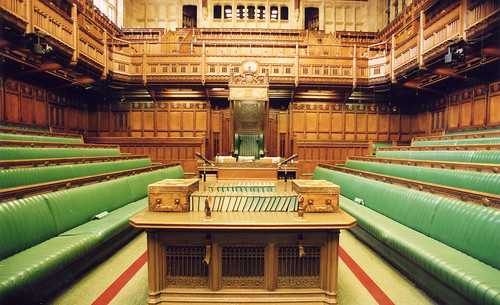
Real Sleaze on Slime-Green Benches

The Monarchist reported about eight months ago on the entry of the High Tory Gerald Warner into the pages of the Daily Telegraph, with Is It Just Me?, after the apparent sacking from Scotland on Sunday.

Gerald Warner did have a Scotland on Sunday column at the end of last June, and the Warner column occasionally ran until November. Since November 16, however, whilst blogging at the Daily Telegraph is going strong, Scotland on Sunday has been running a Warner column without exceptions. The column has been revived.

The green benches of ParliamentWrites Gerald Warner this Sunday:

The Lords are more representative than the scoundrels down the corridor

THE controversy over alleged corruption in the House of Lords has provided an excuse for MPs to parade their hypocrisy, clapped-out modernisers to revive the canard of "Lords reform" and commentators to display their consummate ignorance of everything to do with the institution of the peerage.

Clearly, the allegations against the four peers must be investigated and, if well founded, punished. Otherwise, the issue is fogged in spin and stupidity. This is not House of Lords sleaze, any more than l'affaire Jonathan Aitken was described as Commons sleaze: it is Labour sleaze. It is typical of Labour, having ejected hundreds of hereditary peers of impeccable character and replaced them with its own nominees, when the latter sully the reputation of the Upper House to condemn the institution instead of the perpetrators. Sleaze allegations in the Lords are rare: can the same be said of the sanctimonious Commons?
Real sleaze can be found on Parliament's slime-green benches


Read the full article >>

Sunday, 18 January 2009

A Gentleman's Library

Step one in the recovery of our civilization: zero tolerance for dust jackets.

— David Warren

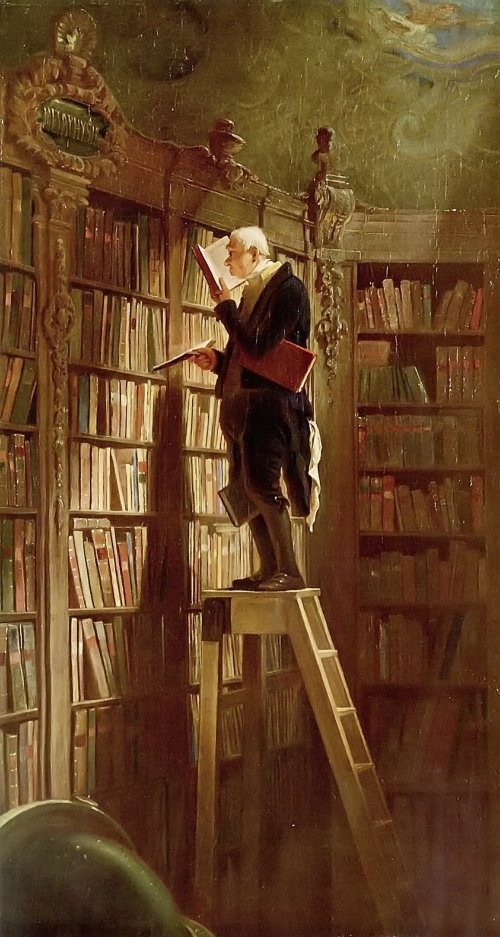
Carl_Spitzweg_021

The cancerous proliferation of the dreaded dust wrapper in modern society, to say nothing about the uncontrolled accumulation of cheap "paperbacks", has done much to degrade the gentleman's natural environment, writes David Warren.

I WISH TO THUNDER TODAY against an abuse that is rampant in our culture. In a few short decades it has grown from being the vice of a small minority of the perverse until it has spread to every section of society. Moreover both in itself and through commercial pandering to it a disgusting habit has led to many other evils — made them possible and contributed to a fiendish inventiveness in the production of still more.

The rot goes deeper -- j'accuse! -- and the very institutions of our state have conspired to spread this vice among our innocent children. Our very libraries once citadels of chaste instruction have joined in the parade of this horrific disorder perfidiously souring the generations to come.

Make no mistake the slide in our standards is enforced and is accelerated by a hidden network of damnable vested interests. It would take the utmost exertions of selfless individual labour and perhaps parliamentary legislation to break their grip. Indeed while I may decently hesitate to recommend the employment of the strong arm of the law for the invasion of domestic privacy it is hard to think what else could be efficacious in suppressing this affront to all we once held dear.

This is a vile business. The things are everywhere and I passionately hate them. I do not allow them into my own quarters and I remonstrate with others who try to bring them in -- verily right into the house in which I live. And yet I am taunted daily by the sight of them insolently littering the bookshelves of my companions and my neighbours.

For I refer to none other than the unspeakable habit of keeping "dust jackets". Nay not merely keeping them but keeping them wrapped around the books with which they were distributed and thus visible wherever and whenever the books themselves are on display.

So far as I am able to make out there were no dust jackets at all before about the middle of the 19th century. I speculate that the practice began with the use of blank tissue or wrapping paper to protect the covers of books especially the delicately-tooled often gold-leafed lettering on the (usually leather) spines. The bookbinder put this on and then the bookseller took it off for the wrap-around necessarily obscured such essential information as the book's title and author.

Then some innovative person thought of printing such information on the outside of the wrapper. This led inevitably to its retention by the bookseller. This ancestral dust jacket could continue protecting the book from scratching airborne grime and the effects of casual handling in the bookshop. The jackets also prevented the sun from bleaching the rich colours in the cover if the book were shown in the shop window.

It was found that more information about the book could be put more boldly on the jacket's spine face reducing the need of the casual browser to handle it. Then discreet advertising blurbs began to appear on the jackets' front covers only encouraging them again. Like material then spread to the front flap to the back cover to the back flap and catalogue information was finally put on the reverse side of the wrapper. All fair enough no reasonable man will object to a gentle sales pitch.

But then some mute inglorious Milton got the idea of putting a picture on the wrapper. At first decorative woodcuts and the like but soon more elaborate and attention-grabbing illustrations. Colours came into play then photography and rotogravure and other printing methods to make the jackets "sing" against the competition -- and by tiny increments they grew more and more objectionably shiny. Coatings were applied to make the colours more vivid. And in the space of little more than a century the average dust wrapper had become unmistakably loud and lewd.

I leave aside the development of these vicious modern "paperbacks" -- a direct consequence of the evolution of dust jackets with their screaming soft covers crudely glued around their cheap pulp innards. As newspapers and magazines paperbacks are meant to be read and discarded -- and thus handled without respect. To allow them to accumulate is to allow one's environment to be degraded.

But a book is a book is a book -- meant to be passed down the generations while speaking to each successive reader. No expense should be spared in preparing it for its journey through time. With age and careful use it should develop a fine patina; or in the case of disintegration the binding renewed or replaced.

Dust jackets are not merely an awkward impediment to reading (requiring real butchery when the public libraries plasticize them and glue them into place). What has happened in our time -- and owing directly to this wicked practice of keeping the dust wrappers -- can be seen if only the jacket is removed.

For the book within it is now often as not an hideous abortion. It is made no better than a paperback only larger. Stiff nasty grease-absorbing pasteboards encase unstitched puffy acidic sheets bearing garishly oversized typography. And that is only the outward manifestation of something deeper. For when you condescend to read the "book" almost invariably you discover it was mere vacuous stuffing to fill the lurid come-on wrapped around it. The jacket has been used to cover a multitude of sins.

Step one in the recovery of our civilization: zero tolerance for dust jackets.


Read the full article >>

Sunday, 11 January 2009

Wednesday, 7 January 2009

The Hipster: Enemy to the Gentleman

Counter-culture is a pervasive piece of Western civilization. Wherever there is one cultural trend dominant in a society, there will always be those who rebel against it. From the Hippies of the 60s to the Disco-goers of the 70s to the Punks of the 80s. We here at the Monarchist, and our comrades at the Chap magazine, can be considered a counter-counter culture. We seek a return to the more dignified times of our Edwardian forefathers.

Those who know me personally will know that I loath the subset of people known as hipsters. We all know the type. Vacant expression, horrible haircuts, skinny trousers, an "I don't give a damn" attitude, porkpie hats, unneccessary eyeglasses, oversized sunglasses, a love of post-modernism and irony, no respect or reverence for... anything really. Not the Queen, not their country, not any 'old' or 'uncool' institutional. They don't even have any respect for forms of comedy that aren't quirky and ironic. These are the people who made quirky-for-it's-own-sake films like "Juno" and "Superbad" enormous successes. They are, in essence, the bastardized product of the Hippie, Punk and Grunge movements, all mixed together into one bland, homogenized whole. They are the antithesis of everything gentlemanly. Most frustratingly, the vast majority of hipsters are from the Upper Classes, people who we expect to act out with more chivalry, more gentlemanly conduct, but instead these hipsters immerse themselves in the trappings of the working class. They eschew everything perceived to be 'old', chivalry included. Respect for Her Majesty, respect for government, respect for law, respect to family, they scoff at it all and shrug it off as unimportant. There's that "I don't give a damn" attitude I mentioned earlier. These people are the reason why voter turnout in countries like Canada has been at record lows in the recent years: Because young people are too self-absorbed to care about who governs them.

I recently found an article that i'd like to post here, that I think lays out, in precise and concise prose, what hipsters are, and why exactly they damage culture by their very existence. Perhaps it doesn't side with the Gentlemanly counter-counter culture that we here at the Monarchist uphold, but it does tear a strip off the Gentleman's biggest enemy. And you know what they say about the enemy of my enemy...

Ah, just a note of warning: This article does contain some coarse language which some gentlemen and ladies may find offensive. I know there are at least two incidents of the F-word. If you find that particularly distasteful, then abstain from reading. If you can handle a few instances of coarse language: Read on.

I‘m sipping a scummy pint of cloudy beer in the back of a trendy dive bar turned nightclub in the heart of the city’s heroin district. In front of me stand a gang of hippiesh grunge-punk types, who crowd around each other and collectively scoff at the smoking laws by sneaking puffs of “screw-you,” reveling in their perceived rebellion as the haggard, staggering staff look on without the slightest concern.

The “DJ” is keystroking a selection of MP3s off his MacBook, making a mix that sounds like he took a hatchet to a collection of yesteryear billboard hits, from DMX to Dolly Parton, but mashed up with a jittery techno backbeat.
“So… this is a hipster party?” I ask the girl sitting next to me. She’s wearing big dangling earrings, an American Apparel V-neck tee, non-prescription eyeglasses and an inappropriately warm wool coat.
“Yeah, just look around you, 99 percent of the people here are total hipsters!”
“Are you a hipster?”
“Fuck no,” she says, laughing back the last of her glass before she hops off to the dance floor.

Ever since the Allies bombed the Axis into submission, Western civilization has had a succession of counter-culture movements that have energetically challenged the status quo. Each successive decade of the post-war era has seen it smash social standards, riot and fight to revolutionize every aspect of music, art, government and civil society.

But after punk was plasticized and hip hop lost its impetus for social change, all of the formerly dominant streams of “counter-culture” have merged together. Now, one mutating, trans-Atlantic melting pot of styles, tastes and behavior has come to define the generally indefinable idea of the “Hipster.”

An artificial appropriation of different styles from different eras, the hipster represents the end of Western civilization – a culture lost in the superficiality of its recent past and unable to create any new meaning. Not only is it unsustainable, it is suicidal. While previous youth movements have challenged the perceived dysfunction and decadence of their elders, today we have the “hipster” – a youth subculture that mirrors the doomed shallowness of mainstream society.

Take a stroll down the street in any major North American or European city and you’ll be sure to see a speckle of fashion-conscious twentysomethings hanging about and sporting a number of predictable stylistic trademarks: skinny jeans, cotton spandex leggings, fixed-gear bikes, vintage flannel, fake eyeglasses and a keffiyeh – initially sported by Jewish students and Western protesters to express solidarity with Palestinians, the keffiyeh has become a completely meaningless hipster cliché fashion accessory.

The American Apparel V-neck shirt, Pabst Blue Ribbon beer and Parliament cigarettes are symbols and icons of working or revolutionary classes that have been appropriated by hipsterdom and drained of meaning. Ten years ago, a man wearing a plain V-neck tee and drinking a Pabst would never be accused of being a trend-follower. But in 2008, such things have become shameless clichés of a class of individuals that seek to escape their own wealth and privilege by immersing themselves in the aesthetic of the working class.

This obsession with “street-cred” reaches its apex of absurdity as hipsters have recently and wholeheartedly adopted the fixed-gear bike as the only acceptable form of transportation – only to have brakes installed on a piece of machinery that is defined by its lack thereof.

Lovers of apathy and irony, hipsters are connected through a global network of blogs and shops that push forth a global vision of fashion-informed aesthetics. Loosely associated with some form of creative output, they attend art parties, take lo-fi pictures with analog cameras, ride their bikes to night clubs and sweat it up at nouveau disco-coke parties. The hipster tends to religiously blog about their daily exploits, usually while leafing through generation-defining magazines like Vice, Another Magazine and Wallpaper. This cursory and stylized lifestyle has made the hipster almost universally loathed.

“These hipster zombies… are the idols of the style pages, the darlings of viral marketers and the marks of predatory real-estate agents,” wrote Christian Lorentzen in a Time Out New York article entitled ‘Why the Hipster Must Die.’ “And they must be buried for cool to be reborn.”

With nothing to defend, uphold or even embrace, the idea of “hipsterdom” is left wide open for attack. And yet, it is this ironic lack of authenticity that has allowed hipsterdom to grow into a global phenomenon that is set to consume the very core of Western counterculture. Most critics make a point of attacking the hipster’s lack of individuality, but it is this stubborn obfuscation that distinguishes them from their predecessors, while allowing hipsterdom to easily blend in and mutate other social movements, sub-cultures and lifestyles.

Standing outside an art-party next to a neat row of locked-up fixed-gear bikes, I come across a couple girls who exemplify hipster homogeneity. I ask one of the girls if her being at an art party and wearing fake eyeglasses, leggings and a flannel shirt makes her a hipster.
“I’m not comfortable with that term,” she replies.
Her friend adds, with just a flicker of menace in her eyes, “Yeah, I don’t know, you shouldn’t use that word, it’s just…”
“Offensive?”
“No… it’s just, well… if you don’t know why then you just shouldn’t even use it.”
“Ok, so what are you girls doing tonight after this party?”
“Ummm… We’re going to the after-party.”

Gavin McInnes, one of the founders of Vice, who recently left the magazine, is considered to be one of hipsterdom’s primary architects. But, in contrast to the majority of concerned media-types, McInnes, whose “Dos and Don’ts” commentary defined the rules of hipster fashion for over a decade, is more critical of those doing the criticizing.

“I’ve always found that word [“hipster”] is used with such disdain, like it’s always used by chubby bloggers who aren’t getting laid anymore and are bored, and they’re just so mad at these young kids for going out and getting wasted and having fun and being fashionable,” he says. “I’m dubious of these hypotheses because they always smell of an agenda.”

Punks wear their tattered threads and studded leather jackets with honor, priding themselves on their innovative and cheap methods of self-expression and rebellion. B-boys and b-girls announce themselves to anyone within earshot with baggy gear and boomboxes. But it is rare, if not impossible, to find an individual who will proclaim themself a proud hipster. It’s an odd dance of self-identity – adamantly denying your existence while wearing clearly defined symbols that proclaims it.

“He’s 17 and he lives for the scene!” a girl whispers in my ear as I sneak a photo of a young kid dancing up against a wall in a dimly lit corner of the after-party. He’s got a flipped-out, do-it-yourself haircut, skin-tight jeans, leather jacket, a vintage punk tee and some popping high tops.

“Shoot me,” he demands, walking up, cigarette in mouth, striking a pose and exhaling. He hits a few different angles with a firmly unimpressed expression and then gets a bit giddy when I show him the results.

“Rad, thanks,” he says, re-focusing on the music and submerging himself back into the sweaty funk of the crowd where he resumes a jittery head bobble with a little bit of a twitch.

The dance floor at a hipster party looks like it should be surrounded by quotation marks. While punk, disco and hip hop all had immersive, intimate and energetic dance styles that liberated the dancer from his/her mental states – be it the head-spinning b-boy or violent thrashings of a live punk show – the hipster has more of a joke dance. A faux shrug shuffle that mocks the very idea of dancing or, at its best, illustrates a non-committal fear of expression typified in a weird twitch/ironic twist. The dancers are too self-aware to let themselves feel any form of liberation; they shuffle along, shrugging themselves into oblivion.

Perhaps the true motivation behind this deliberate nonchalance is an attempt to attract the attention of the ever-present party photographers, who swim through the crowd like neon sharks, flashing little blasts of phosphorescent ecstasy whenever they spot someone worth momentarily immortalizing.

Noticing a few flickers of light splash out from the club bathroom, I peep in only to find one such photographer taking part in an impromptu soft-core porno shoot. Two girls and a guy are taking off their clothes and striking poses for a set of grimy glamour shots. It’s all grins and smirks until another girl pokes her head inside and screeches, “You’re not some club kid in New York in the nineties. This shit is so hipster!” – which sparks a bit of a catfight, causing me to beat a hasty retreat.

In many ways, the lifestyle promoted by hipsterdom is highly ritualized. Many of the party-goers who are subject to the photoblogger’s snapshots no doubt crawl out of bed the next afternoon and immediately re-experience the previous night’s debauchery. Red-eyed and bleary, they sit hunched over their laptops, wading through a sea of similarity to find their own (momentarily) thrilling instant of perfected hipster-ness.

What they may or may not know is that “cool-hunters” will also be skulking the same sites, taking note of how they dress and what they consume. These marketers and party-promoters get paid to co-opt youth culture and then re-sell it back at a profit. In the end, hipsters are sold what they think they invent and are spoon-fed their pre-packaged cultural livelihood.

Hipsterdom is the first “counterculture” to be born under the advertising industry’s microscope, leaving it open to constant manipulation but also forcing its participants to continually shift their interests and affiliations. Less a subculture, the hipster is a consumer group – using their capital to purchase empty authenticity and rebellion. But the moment a trend, band, sound, style or feeling gains too much exposure, it is suddenly looked upon with disdain. Hipsters cannot afford to maintain any cultural loyalties or affiliations for fear they will lose relevance.

An amalgamation of its own history, the youth of the West are left with consuming cool rather that creating it. The cultural zeitgeists of the past have always been sparked by furious indignation and are reactionary movements. But the hipster’s self-involved and isolated maintenance does nothing to feed cultural evolution. Western civilization’s well has run dry. The only way to avoid hitting the colossus of societal failure that looms over the horizon is for the kids to abandon this vain existence and start over.

“If you don’t give a damn, we don’t give a fuck!” chants an emcee before his incitements are abruptly cut short when the power plug is pulled and the lights snapped on.

Dawn breaks and the last of the after-after-parties begin to spill into the streets. The hipsters are falling out, rubbing their eyes and scanning the surrounding landscape for the way back from which they came. Some hop on their fixed-gear bikes, some call for cabs, while a few of us hop a fence and cut through the industrial wasteland of a nearby condo development.

The half-built condos tower above us like foreboding monoliths of our yuppie futures. I take a look at one of the girls wearing a bright pink keffiyah and carrying a Polaroid camera and think, “If only we carried rocks instead of cameras, we’d look like revolutionaries.” But instead we ignore the weapons that lie at our feet – oblivious to our own impending demise.

We are a lost generation, desperately clinging to anything that feels real, but too afraid to become it ourselves. We are a defeated generation, resigned to the hypocrisy of those before us, who once sang songs of rebellion and now sell them back to us. We are the last generation, a culmination of all previous things, destroyed by the vapidity that surrounds us. The hipster represents the end of Western civilization – a culture so detached and disconnected that it has stopped giving birth to anything new.
So there it is, ladies and gentleman, the Hipster. A vapid, loathsome group, with nothing but disdain for all the virtues we at the Monarchist try to promote. Honour, loyalty, reverence, it means nothing to them. Being a gentleman means nothing to the men, being a lady means nothing to the women. They have no zest for life, no appreciation of the miracle that is life. They are shallow in the most profound of ways. The deep sense of spiritual satisfaction one would find in an Edwardian gentleman's club, that is something utterly unknown to them. Of all the distasteful parts of a distasteful modern age, they are the worst. They are the ones who undermine all the values we hold so dear. Let us hope that the Hipster movement dies off soon, as the first decade of the 21st century comes to a close.

God save the Queen and the Maple Leaf Forever
-Gladstone.


Read the full article >>
Sunday, 4 January 2009

Lord Dunsany's Dean Spanley

A gentle tale of Edwardian spiritualism set in Imperial England where upper lips are always stiff and men from the Colonies are not entirely to be trusted. The perfect winter warmer, says Tom Woollen.


Read the full article >>

Wednesday, 31 December 2008

"With emotion, to the man I used to be"

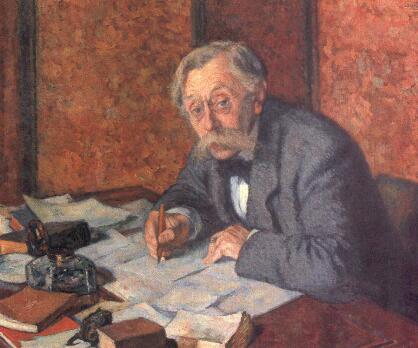
Emile_Verhaeren01
Emile Verhaeren (1855-1916)

THE PROUD TOWER built up through the great age of European civilization was an edifice of grandeur and passion, of riches and beauty and dark cellars. Its inhabitants lived, as compared to a later time, with more self-reliance, more confidence, more hope; greater magnificence, extravagance and elegance; more careless ease, more gaiety, more pleasure in each other's company and conversation, more injustice and hypocrisy, more misery and want, more sentiment including false sentiment, less sufferance of mediocrity, more dignity in work, more delight in nature, more zest. The Old World had much that has since been lost, whatever may have been gained. Looking back on it from 1915, Emile Verhaeren, the Belgian socialist poet, dedicated his pages, "With emotion, to the man I used to be."

— Barbara Tuchman, The Proud Tower, A Portrait of the World before the War

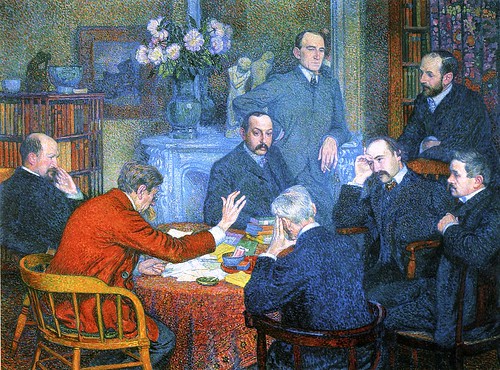
Theo_van_Rysselberghe-_A_Reading_by_Emile_Verhaeren
A Reading by Emile Verhaeren (1903) - Emile Verhaeren as seen from the back in his red jacket


Read the full article >>

Tuesday, 9 December 2008

400 years of John Milton (1608-1674)

...he was a true Poet, and of the Devil's party without knowing it.
- William Blake on Milton's Paradise Lost.

John Milton was born 400 years ago today, on December 9, 1608. If Oliver Cromwell is English history's most famous republican, John Milton must be regarded as England's most famous republican poet. Samuel Johnson called him that "acrimonious and surly republican" for his dangerous commitment to the English Revolution and his continuing unpopular attacks against Royalists right up to the time of the Restoration. Milton was very much a political, social and religious radical for his time, who fought for oligarchical government over absolute monarchy, who supported legal measures for divorce and polygamy, who rejected the Holy Trinity of the Bible and believed in mortalism over the divinity of Christ. He forthrightly hated the High Church, he hated the Lords and he hated the natural power of Kings. He was the very opposite of a Cavalier Poet.

Two weeks after the execution of Charles I in 1649, Milton committed himself to the Republican side by publishing The Tenure of Kings and Magistrates in support of the regicide. His argument (which runs in direct opposition to Hobbes' Leviathan published in 1651), was that a monarch's power is not absolute, but derived from the people he rules and held in accordance with a social contract. If a monarch breaks this contract by abusing his position, the people have the right to remove him from power. Not exactly radical stuff by the standards of today.

Milton joins hands with John Locke as an early apostle of liberalism who fought against the absolutist monarchist writings of Robert Filmer and Thomas Hobbes. His last major pamplet published in 1660 was an anti-monarchical protest in the face of the coming Restoration, which expresses a feeling of despair at seeing his countrymen so eager to run back to servitude. Milton seemed to think that it was better to reign in Hell than serve in Heaven, but there is also a real sense of the man as a lone but stalwart adherent to a greater truth rebelling against a false authority. "The work is an impassioned, bitter, and futile jeremiad damning the English people for backsliding from the cause of liberty and advocating the establishment of an authoritarian rule by an elitist, unelected parliament." Perhaps fearing the tyranny of the many in addition to the tyranny of the one, he favoured not a democratic solution but a perpetual Rump Parliament, a kind of governing council with a permanent ruling membership. Unfortunately the modern word Politburo comes to mind, but to Milton this was The Ready and Easy Way to Establish a Free Commonwealth.

Milton's view of monarchy and the decadence of monarchy is a theme later emphasized in Paradise Lost. Within this epic, Milton's magnus opus, Satan is directly linked to monarchical rule. The tone of the piece is to ensure that the citizenry would not backslide into their old monarchical ways. In particularly, Milton relied on predictions of the future combined with biblical analogies to ensure that people knew the dangers inherent in such a governmental system. In particular, Milton argued that it would be a sin against God to bring back the monarchy and warned against the lack of freedom and virtue that would correspond with a king.

How stunned Milton would be 400 years after his birth to learn that freedom and virtue wear a Crown.


Read the full article >>

Sunday, 16 November 2008

Ranch Republican or British Monarchy?

We remember the wars, the five trillion dollars in added American debt and the calamities that bookend the Dubya years. But the English-speaking gentleman did not truly become aghast until that unforgettable summer day in 2007 when Her Majesty came to Washington on one of her rare state visits to the Capitol.

How not to wear white tie, courtesy of George W. Bush:

1. The waistcoat should never extend below the bottom of the tailcoat.

2. The shirt collar must be a wing collar.

3. The trousers are to be worn at the waist, not slung down around the hips.

4. The shirt sleeve should have at least 3/4" of cuff.
(To be fair, Prince Philip is equally guilty of this particular faux pas, but you didn't read that at The Monarchist. By the way, what do you suppose our Grand Old Duke is thinking as he sets his eyes on Dubya?)

5. Also, avoid goofy laughter in the presence of Her Majesty The Queen.

From The Black Tie Guide, A Gentleman's Guide to Evening Dress. (Except for number five which is mine).


Read the full article >>

Saturday, 8 November 2008

Fox Hunting more Popular than Ever

More than 80 landowners, including the Duke of Norfolk, are to renew a legal attempt to ban hunt protesters from private estates.

More than 80 landowners, including the Duke of Norfolk, are to renew a legal attempt to ban hunt protesters from private estates.
Police are seeking greater access to hunts to prevent the four-year-old ban being flouted amid a surge of interest in the pursuit.

Since the ban came into force on 18 February 2005, the number of hunt members has increased by about 5,000, with about 50,000 regular riders, while the number of people watching the hunts has grown to 120,000. Total turnover of the hunts has grown from £155 million a year before the ban to at least £170 million.


The hounds are baying, the horses are stamping their hooves and the port is being passed around at Puckeridge Hunt. How's that, you ask?


Read the full article >>

Friday, 24 October 2008

Scenes of Edwardian London

Because this blog sometimes has the profound spiritual satisfaction of an Edwardian Gentlemen's Club, dating roughly back to 1904, I thought it would be useful to show our viewers what it was like to take a blissful stroll in Imperial London during the summer of that very year.


Read the full article >>

Wednesday, 22 October 2008

W.E.H. Lecky – Brave Critic of the New Age

Five score and five years ago today, October 22, 1903, William Edward Hartpole Lecky passed on from this world. Lecky was a historian, a political philosopher, and a Member of Parliament at Westminster for Dublin University. The new age was rising, and against it stood W.E.H. Lecky. In the words of William Murchison, he chose to write – and fight.

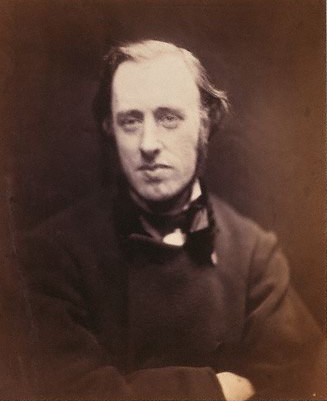
William Edward Hartpole Lecky
Writes William Murchison further in the introduction to W.E.H. Lecky's Democracy and Liberty:

Democracy was the late Victorian age's great passion – a concept not just to profess but to translate into reality. The democracy professed was less radical than that of the French revolutionaries who, in Burke's day, had cried "Liberty, Fraternity, Equality!" – and then decapitated thousands of their free and equal brethren. Democracy to the Victorians, meant something relatively high-minded – government by the majority for the benefit of the majority. The principle was amiable enough, certainly. It was in the practical application that things began to go wrong, as Lecky and a few others easily discerned. The implications of democracy for good government, for liberty – for precisely the values that democracy was meant to assert – were deeply disturbing.
William Murchison describes Democracy and Liberty further:
The argument of the book is the incompatibility of two concepts which, in the late 20th century, are regarded virtually as twins – democracy and liberty. The one might seem, at first glance, to reinforce and invigorate the other. But it was not so, as Lecky proceeded to establish in detail.
Murchison continues:
What had worked best for Britain, so far as he was concerned, was the electoral system that prevailed from the Reform Bill of 1832 until the Reform Bill of 1867. In 1832, the middle class had been enfranchised. The change had, at the time, split the country asunder, but it had worked. This was because, in Lecky's view, it had admitted to power a class of men solid, trustworthy, educated, and hard-working. Their merits, not their abstract “rights,” qualified them for the franchise. It was different with the millions granted the vote in 1867 and 1884. Sheer numbers was what mainly seemed to commend them as voters.
Murchison goes on:
What Lecky feared was that his country's government would pass out of the hands of gentlemen and “into the hands of professional politicians” – like those to be found in the United States.
Further Murchison writes:
Lecky was concerned, accordingly, that gentlemen should continue to govern. He was concerned especially for the future of the House of Lords, which fast was coming to be regarded as a feudal relic, occupying a “secondary position in the Constitution.” “Man for man, he wrote, “it is quite possible that (the Lords) represents more ability and knowledge than the House of Commons, and its members are certainly able to discuss public affairs in a more single-minded and disinterested spirit.” The peers' “superiority of knowledge” was “very marked.” They were more than ornamental; they contributed, along with the Throne, to the kingdom's “greatness and cohesion.”
Lecky was a Privy Councillor and was bestowed with the Order of Merit.

W.E.H. Lecky blamed the rebellion in the American colonies largely on the encroachments of Parliament on Royal Prerogative.

Of the American Electoral College Lecky wrote:
In this manner it was hoped that the President might be elected by the independent votes of a small body of worthy citizens who were not deeply plunged in party politics. But, as the spirit of party intensified and the great party organisations attained their maturity, this system wholly failed.
Of President Andrew Jackson Lecky wrote:
The modern system of making all posts under the Government, however unconnected with politics, rewards for party services was organised, in 1829, by Andrew Jackson. This President may be said to have completed the work of making the American Republic a pure democracy, which Jefferson had begun. His statue stands in front of the White House at Washington as one of the great men of America, and he assuredly deserves to be remembered as the founder of the most stupendous system of political corruption in modern history.
Of democracy and regulation Lecky wrote:
In our own day, no fact is more incontestable and conspicuous than the love of democracy for authoritative regulation.
Of the House of Commons Lecky wrote:
Of all the forms of government that are possible among mankind, I do not know any which is likely to be worse than the government of a single omnipotent democratic Chamber. It is at least as susceptible as an individual despot to the temptations that grow out of the possession of an uncontrolled power, and it is likely to act with much less sense of responsibility and much less real deliberation. The necessity of making a great decision seldom fails to weigh heavily on a single despot, but when the responsibility is divided among a large assembly, it is greatly attenuated. Every considerable assembly also, as it has been truly said, has at times something of the character of a mob. Men acting in crowds and in public, and amid the passions of conflict and debate, are strangely different from what they are when considering a serious question in the calm seclusion of their cabinets.
Of the worship of majorities Lecky wrote:
He will not, if he is a wise man, be reassured by the prevailing habit, so natural in democracies, of canonising, and almost idolising, mere majorities, even when they are mainly composed of the most ignorant men, voting under all the misleading influences of side-issues and violent class or party passions. The ‘voice of the people,’ as expressed at the polls, is to many politicians the sum of all wisdom, the supreme test of truth or falsehood. It is even more than this: it is invested with something very like the spiritual efficacy with theologians have ascribed to baptism. It is supposed to wash away all sin. However unscrupulous, however dishonest, may be the acts of a party or of a statesman, they are considered to be justified beyond reproach if they have been condoned or sanctioned at a general election. It has sometimes happened that a politician has been found guilty of a grave personal offence by an intelligent and impartial jury, after a minute investigation of evidence, conducted with the assistance of highly trained advocates, and under the direction of an experienced judge. He afterwards finds a constituency which will send him to Parliament, and the newspapers of his party declare that his character is now clear. He has been absolved by ‘the great voice of the people.’ Truly indeed did Carlyle say that the superstitions to be feared in the present day are much less religious than political; and all the forms of idolatry I know none more irrational and ignoble than this blind worship of mere numbers.
Democracy and Liberty, a two-volume work, is indeed refreshing reading, now even more than a century after its publication. We honor the memory of William Edward Hartpole Lecky. May he continue to rest in peace.


Read the full article >>

Wednesday, 27 August 2008

"Gentlemen, you may smoke"

THE LONG BAN ON SMOKING mercifully came to an end with the demise of Queen Victoria in 1901. During that long reign - the longest ever - smoking was frowned upon and not allowed at court. The Empress encouraged an anti-smoking society throughout Victorian England, even while chimney sweeps and gentlemen clubs cluttered the imperial capital. That all changed overnight when Edward VII ascended the throne at the beginning of the 20th Century, and after dinner on his first day as King pronounced, "Gentlemen, you may smoke".

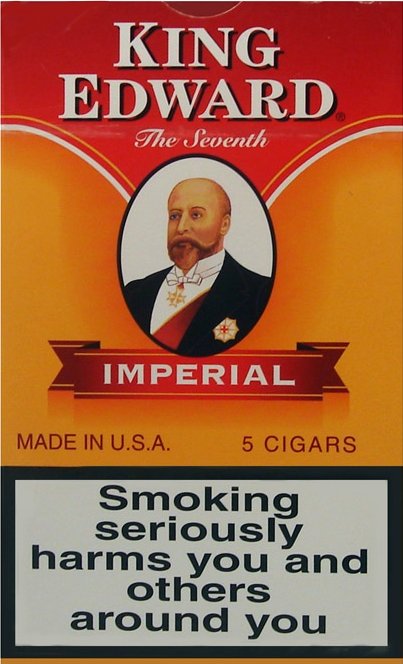
King%20Edward%20Imperial%20CigarsPerhaps that is why a fine cigar is a guilty pleasure for an English gentleman - it goes back to that day when eminent men in their black clad awe were mourning the passing of an era, and then that moment of embarrassed exhilaration arrives when the new King enters the room and declares that men should characterise their gravitas by puffing away! Oh, what sad and strange elation is this, the Edwardian era has arrived!


Read the full article >>

Wednesday, 30 July 2008

The Gentleman Manifesto

A Revolution of Panache: Making the Chap Manifesto our own.

The Chap takes a wry look at the modern world through the steamed-up monocle of a more refined age, occasionally getting its sock suspenders into a twist at the unspeakable vulgarity of the twenty-first century.

Since 1999, the Chap has been championing the rights of that increasingly marginalised and discredited species of Englishman - the gentleman. The Chap believes that a society without courteous behaviour and proper headwear is a society on the brink of moral and sartorial collapse, and it seeks to reinstate such outmoded but indispensable gestures as hat doffing, giving up one's seat to a lady and regularly using a trouser press.


* * *

SOCIETY HAS BECOME SICK WITH SOME NAMELESS MALADY OF THE SOUL. We have become the playthings of corporations intent on converting our world into a gargantuan shopping precinct. Pleasantness and civility are being discarded as the worthless ephemera of a bygone age - an age when men doffed their hats to the ladies, and small children could be counted upon to mind one's Jack Russell while one took a mild and bitter in the local hostelry.

Instead, we live in a world where children are huge hooded creatures lurking in the shadows; the local hostelry has been taken over by a large chain that specialises in chilled lager, whose principal function is to aggravate the nervous system. Needless to say, the Jack Russell is no longer there upon one's return.

The Chap proposes to take a stand against this culture of vulgarity. We must show our children that the things worth fighting for are not the latest plastic plimsolls but a shiny pair of brogues. We must wean them off their alcopops and teach them how to mix martinis. Let the young not be ashamed of their flabby paunches, which they try to hide in their nylon tracksuits - we shall show them how a well-tailored suit can disguise the most ruined of bodies. Finally, let us capitalise on youth's love of peculiar argot Ð only replace their pidgin ghetto-speak with fruity bons mots and dry witticisms.

It is time for Chaps and Chapettes from all walks of life to stand up and be counted. But fear not, ye languid and ye plain idle: ours is a revolution based not on getting up early and exerting oneself - but a revolution that can be achieved by a single raised eyebrow over a monocle; the ordering of a glass of port in All Bar One; the wearing of a particularly fetching cardigan upon a visit to one's bookmaker. In other words: a revolution of panache. We shall bewilder the masses with seams in our trousers that could cut paper, trilbies angled so rakishly that traffic comes to a standstill; and by refusing the bland, watery substances that are foisted upon us by faceless corporations, we shall bring the establishment to its knees, begging for sartorial advice and a nip from our hip flasks.

All men are equal. All men, that is, who possess umbrellas.
- E.M. Forster


Read the full article >>

Tuesday, 8 July 2008

The Duke and his d'Orsay

I must say the Duke of Edinburgh is looking rather dapper here in his morning suit and beaver hat. Is that a d'Orsay or Regent, I think it's a d'Orsay, which fell from fashion eons ago when beaver felt made way for silk. Whatever the style, the choice of pearl gray is perfect for afternoon garden parties like this one at Holyroodhouse, though strictly forboden as evening wear.

Insight%20jul08%20gallery%20holy4%20largePrince Albert singlehandedly saved the Canadian beaver from extinction, when he donned the silk top hat as a statement of royal pleasure in 1850. For the three hundred years prior (1550-1850), virtually all hats were produced from beaver pelt, from the bicorn/tricorn cocked hats of the navy and army, to the mass of gentlemen toppers across civilised Europe, and the Hudson Bay Company flourished as a result. The beaver was trapped out of existence in mainland Europe and then Scandanavia before operations really took off in British North America. Thanks to Prince Albert, the great and glorious beaver never met the same fate in the New World. Isn't that right, dear Beaverbrook!


Read the full article >>

Monday, 7 July 2008

Pugnacious Defender of Emperor Charles

Lieutenant-Colonel Edward Lisle Strutt, C.B.E., D.S.O. (1874-1948), formidable Alpiner, fierce partisan of the Old Order and fervent protector of Blessed Charles, the "last" Austro-Hungarian Emperor

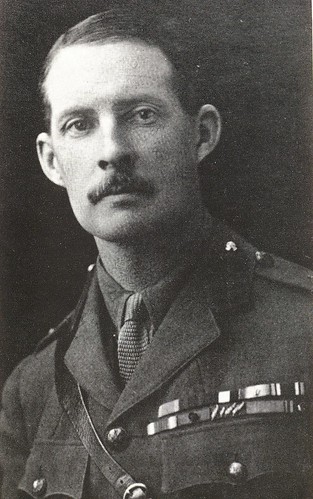
Lieutenant-Colonel Edward Lisle Strutt, CBE, DSO

Lt.-Col. Strutt died 60 years ago today

To paraphrase what Pierre Berton said of Sam Steele, some men are fortunate in the accident of their names, but few are more furtunate than Edward Lisle Strutt. That marvellous surname, rendered both blunt and familiar – suggestive of an unyielding and pontificating aristocrat – was utterly appropriate to the man who bore it. The two names Edward Strutt fitted him as neatly as his puttees; in tandem they sing like a well-tempered sword whirling in battle, and the sound they make is the sound of command – a born leader: bold, resolute, keen-eyed and barrel-chested, all the cliches apply, "erect as a pine tree and limber as a cat".

The Great War

Companion of the Distinguished Service OrderStrutt was born the same year as Churchill as a grandson of the first Baron Belper – after whom he was named – and a future cousin of the third Baron Belper. He was a devout partisan of the Old European Order. Lt.-Col. Edward Lisle Strutt fought in the Boer War between 1900 and 1902, for which he was decorated with Queen's Medal and King's Medal, and where he was mentioned in despatches. He fought in the First World War between 1914 and 1919, where he was wounded and mentioned in despatches four times. He gained the rank of Temporary-Lieutenant and GSO(1) in 1916. He was decorated with the Companion, Distinguished Service Order (D.S.O.) in 1918. He was decorated with the Officer, Legion of Honour. He was decorated with the Croix de Guerre (French). He was decorated with the Chevalier, Order of Romania. He was decorated with the Chevalier, Order of Leopold of Belgium. He was decorated with the Croix de Guerre (Belgian). He was invested as a Commander, Order of the British Empire (C.B.E.) in 1919. He gained the rank of Lieutenant-Colonel in the service of the Royal Scots. He held the office of Allied High Commissioner in Danzig in 1920. In 1922 he was the second in charge of the Everest Expedition. He died on 7 July 1948 at age 74, sixty years ago today, without issue.

The Situation in Austria

EckartsauThe Great War had ended. The democratic republican age was dawning. The monarchical age was setting. Whilst the latter had been challenged for quite some time, the war had completely destroyed the monarchical order’s immune system. This was with “good” help from Woodrow Wilson’s crusade to make the world safe for democracy, but this crusade was of course not the only contributing factor.

The Austrian Emperor had renounced power on November 11, 1918, but without abdicating. His Imperial and Royal Majesty signed a similar declaration as King of Hungary two days later. He had gone with his family into internal exile at Eckartsau – at the hunting lodge there.

That summer the Eastern Emperor and his family had suffered the tragedy at Yekaterinburg. At the Britannic Court in London, King George V reproached himself for what had been allowed to happen to the Russian Imperial Family. There was fear that a similar fate was about to overtake the Western Emperor and his family. With the armed radicals running around in Austria at the time, this was no unfounded fear.

Also, Emperor Charles was remembered as the Emperor who had sought peace and the Archduke who represented the old Emperor Francis Joseph at His Britannic Majesty's own coronation. This indeed gave memories of an old peaceful order that now brutally had been destructed.

At the personal initiative of His Britannic Majesty, the Austro-Hungarian Imperial-Royal Family is put under British protection.

The Background and Sentiment of Strutt

The Coat of Arms of the Baron of BelperLieutenant-Colonel Strutt was a Catholic, like the Emperor he was sent to protect. He was educated in Windsor and at Oxford, and in Innsbruck, Austria. In addition to his native English, the Lt.-Col. was fluent in German and French.

Strutt was, as Gordon Brook-Shepherd noted, a British officer who served the double eagle and the Habsburg black and yellow colors with a fervor second only to the loyalty to His Britannic Majesty.

In addition to having served in the Great War, he did service in the Boer War (1900-1902), for which he was also honored and decorated.

Edward Lisle Strutt was a partisan of the Old European Order. He was a symbol of personal powers of a monarch, as he was sent on the monarch’s personal initiative. He was a symbol of solidarity between monarchs. Strutt was on the fringe related to the Habsburgs. On arrival at the hunting lodge in Eckartsau, he found a photo of the late Archduke Franz Ferdinand, who was assassinated in Sarajevo on June 28, 1914, and himself.

As a grandson of the first Lord Belper, Lt.-Col. Strutt was a British aristocrat. The Belper motto was and is Propositi tenax (‘Firm of purpose’). There was indeed purpose with the Lt.-Col.

Strutt was to have a life-long passionate devotion for the Habsburg family. He was a life-long friend of the Archduke Otto.

On Mission in Austria

The Royal ScotsA few officers preceded Lt.-Col. Strutt in this protection mission. Strutt arrived at Eckartsau on February 27, 1919.

On March 17, Strutt received advice from the War Office in London that the Emperor should depart Austria for Switzerland, without any guarantees for the journey.

The new republican government was talking about abdication, exile, and internment.

On March 20, as an officer of the Royal Scots on the territory of a defeated ex-enemy, Lt.-Col. Strutt walks into the office of the republican government’s Chancellor, Dr. Karl Renner, and demands: “Please stand up in future when I enter your room!” Renner immediately jumped to his feet. Not much later he ordered an Imperial train to be assembled. The Emperor was to leave as, yes, Emperor!

Chancellor Renner shortly before the departure demanded that the Imperial-Royal family and their luggage be searched. Strutt refused, and Renner wanted to send a “High Commissioner.” The officer of the Royal Scots replied that the Chancellor could very well send such a commissioner, but he also promised that such a commissioner would be shot, and by Strutt himself. The republican Chancellor backed down.

On the eve of the departure though, Lt.-Col. Strutt was called to Dr. Renner’s office, where the Chancellor required the Emperor to abdicate in order to be allowed to leave the country. Then comes the Royal Scots officer’s best bluff on this mission. Strutt had drafted a telegram beforehand, stating:
To Director Military Intelligence London
     Austrian Government refuses permission for departure of Emperor unless he abdicates. Consequently give orders to re-establish blockade and stop all food trains entering Austria.
No more conditions were demanded. The Emperor and his family were to go Imperially. The Imperial train left for the Austro-Swiss border on March 23 with Strutt in charge and an NCO and six British Military Policemen accompanying the Imperial and Royal Family and members of what was left of the Court.

On March 24 the train arrived at the Austro-Swiss border. The Emperor issued the Feldkirch Manifesto, declaring the November 11 power renunciation null and void, and denouncing the authority of the republican government.

The old order may have lost the war, but it certainly won the Austrian departure.

Order of the British Empire

Commander of the Military Division of the Most Excellent Order of the British EmpireOn May 30, 1919, on the occasion of His Britannic Majesty’s birthday, Lieutenant-Colonel Edward Lisle Strutt was appointed as Commander of the Military Division of the Most Excellent Order of the British Empire.

Later in Life

In 1920, Lt.-Col. Strutt served as High Commissioner of the Free City of Danzig.

In the spring of 1921 he returned to the Habsburg site of exile in Switzerland, and he helped the exiled Emperor-King in preparations for the spring Hungarian restoration bid. After the failure of the second Hungarian restoration bid that year, the British officer helped with communication between the Imperial-Royal couple aboard the HMS Cardiff and their children in the Helvetic Confederation. Lt.-Col. Strutt also served as messenger to the Habsburgs of an offer to let a house in Madeira.

After retiring from the military, Strutt was second-in-command of a 1922 British Everest expedition. Mountaineering continued to engage Edward Lisle Strutt. He was active in the Alpine Club, where he also served as President and editor.

He died on July 7, 1948, after also having seen the war that indeed and sadly cemented the destruction of Old Europe.

Conclusion

The Royal ScotsThe now 95 year old Archduke Otto, who not long ago still thought of Strutt with great respect and gratitude, was once asked if he was not full of resentment against the British for their treatment of his father, the Emperor. The Archduke replied:
But after all, there was Colonel Strutt.
Lieutenant-Colonel Strutt most definitely serves as a hero for those on the Allied side who did not and do not second the crusade against, or the dismantling of, the Old European Order. Our hero is a shining example that one did not need be a new order crusader to serve on the Allied side.

Lt.-Col. Strutt was loyal to his Sovereign, and he did what he could for the order that the modernists had destroyed. Had Lloyd George been anything close to Lt.-Col. Strutt in character and sentiment, the old order just might have survived.

We salute the memory of Lieutenant-Colonel Edward Lisle Strutt, C.B.E., D.S.O. on this day, 60 years after his passing.


Elsewhere: LewRockwell.com, Wilson Revolution Unplugged


Read the full article >>

Wednesday, 2 July 2008

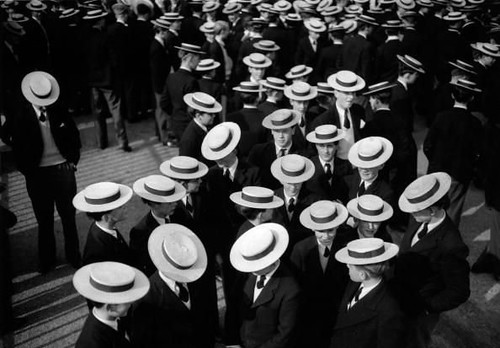
Straw Boaters at Henley Regatta

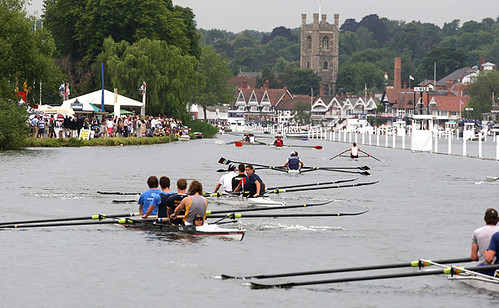
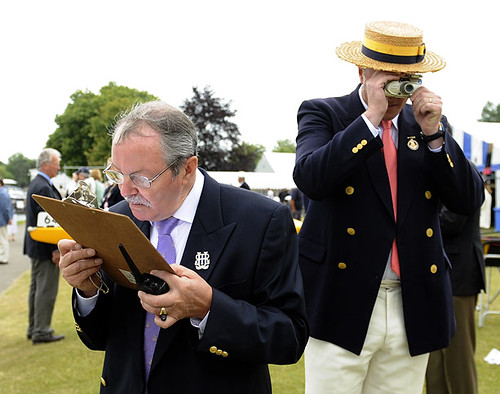
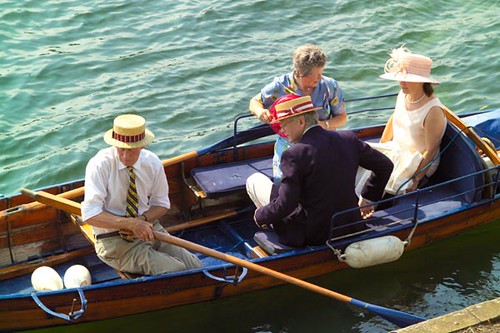
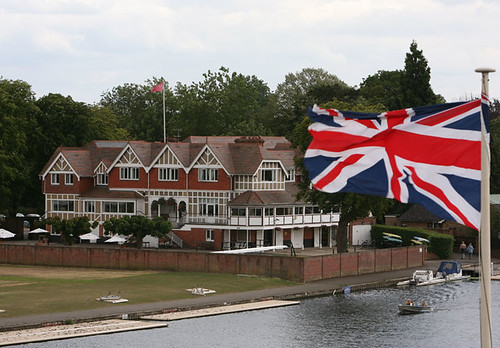
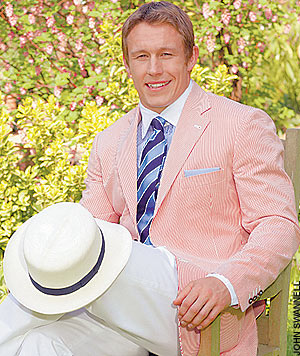
It's Henley Royal Regatta week again. Straw hats, Hampstead-collared shirts, striped cotton blazers and rowing repp ties galore. See you gents at the Leander Club. Don't forget to bring your Pimm's!

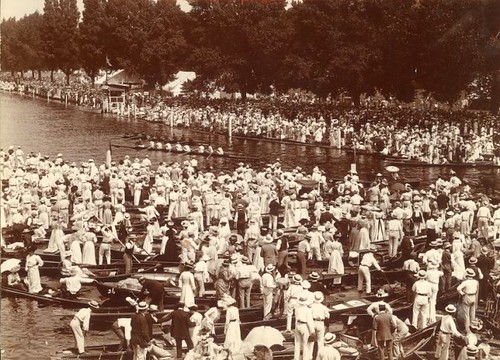
Straw BoatersEarlier this month we reported on the Royal Ascot races, one of the highlights of the English social season. This week ushers in another classic British sporting event, the Henley Royal Regatta. The five-day Regatta, held on the River Thames by the town of Henley-on-Thames, takes place over the first weekend of every July.

3301708International crews compete in various races at the Regatta, which has been held every year since 1839 except during the two World Wars, the main event being the Grand Challenge Cup for Men's Eights. Prince Albert, Queen Victoria's consort, became the Regatta's first Royal Patron in 1851, a tradition carried on by the reigning monarch ever since, though unlike Royal Ascot they don't always deign to attend.

penn01Even more so than at Ascot, Henley provides an opportunity for aristocrats from the sporting and social sets to dress in that distinctively British style which has inspired so many fashion designers over the decades. The commercialization of Henley, unlike Ascot, Wimbledon and cricket at Lord's, has been slower to take hold, and as Godfrey Smith writes in The English Season, it is something of "an Edwardian time warp."

henleyhist

Then and Now

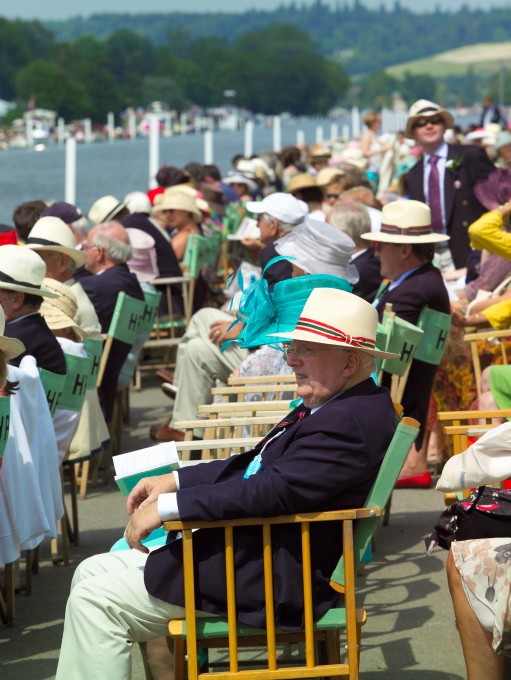
hr-ed-rowchurch_684235nAt Henley, members of rowing and boating clubs sport distinctive blazers, straw hats and repp ties - sometimes all three - in often eye-popping club colors. Like the Royal Enclosure at Ascot, Henley has its own inner sanctum where the bon ton congregate, and as at other English social occasions class distinctions involve fastidiousness of dress. The Stewards' Enclosure, adjacent to the last part of the mile-long course and the finish line, is the most coveted locale.

hr-ed-inspectors_684244aspectators_afloat2_mspectators2
Stewards' Enclosure

Prizegiving takes place here at the Regatta's conclusion, and there is a strict dress code: suits, blazer and flannels or evening dress, and of course neckties, are required for gentlemen while women must wear dresses or skirts that cover the knees. The waiting list for the Stewards' Enclosure, tactfully referred to as "a haven from the general bustle of the Regatta," is several years long. Many gallons of Pimm's and champagne are consumed there.

1
The Leander Club

Another such stylish oasis is the Leander Club founded in 1818, situated just down from the Stewards' Enclosure. The largest, most historic and prestigious rowing club in the world, its members wear bright pink in sometimes surprising combinations.

efjonnyStraw Boater tip to The Classicist for the above article.


Read the full article >>

Saturday, 21 June 2008

Tails and Toppers at Royal Ascot

Proper Toppers may be a thing of the past, but at the Royal Ascot races they are de rigeur. Read Royal Ascot: gentlemen prefer toppers

Insight%20jun08%20gallery%20ascot1%20largeThe Prince of Wales and The Duchess of Cornwall ride down the racecourse at the start of this year's Royal Ascot, 17th-21st June 2008. Royal Ascot is the high fashion event in the summer social calendar, steeped in history, tradition, heritage and pageantry dating back to 1711 when it was founded by Queen Anne.

The jewel in Ascot’s crown, Royal Ascot attracts over 300,000 racegoers each year, to view the splendour and colour of five days of the finest racing, fashion and glamour. The course is closely associated with the British Royal Family, being approximately six miles from Windsor Castle, and owned by the Crown Estate.


Read the full article >>

Sunday, 8 June 2008

Return of the Scots Tory

Gerald Warner is finally back and in his native good form. Having been let go several months ago from The Scotsman for undisclosed reasons (no doubt too Tory, too traditionalist and too British for modern Scottish tastes and nationalist sensibilities), he is now blogging daily at The Telegraph , which means we will be treated to much more of the High Church Royalist than we were with his regular Sunday columns. Those were columns I looked forward to each and every week, ever since one of our Scottish correspondents (thanks, Dundonald!) made me aware of the great man back in 2005. For me, they were mandatory Saturday night bedtime reading, as I took full advantage of the time difference between Upper Canada and Upper Britain, happily digesting every witty word before the earliest risers in Scotland could get their morning Sunday coffee and paper.

For those who haven't had the good fortune to know of him, in the man's own words, he "is an author and broadcaster. He writes on culture, politics, religion and the madness of modern life. It would be an exaggeration to say that he regards the entire world as having gone to the dogs but he certainly thinks it is headed in that direction." He writes under the suitable header, "Is It Just Me?", understandably questioning whether one is a remnant from a bygone era for holding ultra traditionalist views.

It would be technically incorrect to call Mr. Warner a conservative, for how does one conserve all that which has been lost? No, it would make more sense to call the gentleman from north of the Tweed a radical Tory, a fellow counterrevolutionary, a restorative traditionalist with all the elan of a modern day Jacobite. Bring back the stiff upper lip! - Let's lay the keel for a new royal yacht! - Posh, an endangered species! - all radical stuff for this day and age, but it is the forthright funny way he exposes the madness of modernity, today's cheerful indignation being no exception. Remarking on the commercial allure of Che Guevara t-shirts, which are all the rage the world over, Warner intones: Himmler Lager, anyone? Pol Pot Aftershave?

I promise, every missive will bring a smile to your face, so do go and read the happy warrior - you will not be disappointed.


Read the full article >>

Saturday, 7 June 2008

Kitchener's Last Volunteer

More special than the Queen's Official Birthday. Henry Allingham turns 112

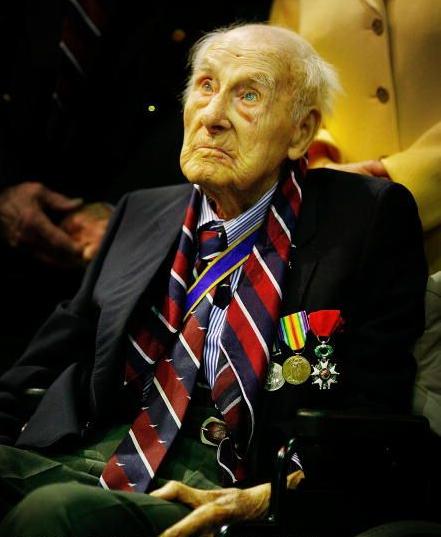
henryHenry Allingham who turned 112 today is the oldest man in Europe and Britain's oldest surviving volunteer of the Great War. Incredibly he fought on land, sea and in the air in that titanic struggle. He is the last founding member of the Royal Air Force and its precursor, the Royal Naval Air Service, and the last surviving veteran of the Battle of Jutland. He has survived 6 monarchs, and 21 prime ministers during his long life, and is one of the last living links to the Victorian age. He is the oldest English man ever.


Read the full article >>