Sixty Joyless De-Britished Uncrowned Commonpoor Years (1949-2009)

Elizabeth II Vice-Regal Saint: Remembering Paul Comtois (1895–1966), Lt.-Governor of Québec
Britannic Inheritance: Britain's proud legacy. What legacy will America leave?
English Debate: Daniel Hannan revels in making mince meat of Gordon Brown
Crazy Canucks: British MP banned from Canada on national security grounds
Happy St. Patrick's: Will Ireland ever return to the Commonwealth?
Voyage Through the Commonwealth: World cruise around the faded bits of pink.
No Queen for the Green: The Green Party of Canada votes to dispense with monarchy.
"Sir Edward Kennedy": The Queen has awarded the senator an honorary Knighthood.
President Obama: Hates Britain, but is keen to meet the Queen?
The Princess Royal: Princess Anne "outstanding" in Australia.
H.M.S. Victory: In 1744, 1000 sailors went down with a cargo of gold.
Queen's Commonwealth: Britain is letting the Commonwealth die.
Justice Kirby: His support for monarchy almost lost him appointment to High Court
Royal Military Academy: Sandhurst abolishes the Apostles' Creed.
Air Marshal Alec Maisner, R.I.P. Half Polish, half German and 100% British.
Cherie Blair: Not a vain, self regarding, shallow thinking viper after all.
Harry Potter: Celebrated rich kid thinks the Royals should not be celebrated
The Royal Jelly: A new king has been coronated, and his subjects are in a merry mood
Victoria Cross: Australian TROOPER MARK DONALDSON awarded the VC
Godless Buses: Royal Navy veteran, Ron Heather, refuses to drive his bus
Labour's Class War: To expunge those with the slightest pretensions to gentility
100 Top English Novels of All Time: The Essential Fictional Library
BIG BEN: Celebrating 150 Years of the Clock Tower
Showing posts with label Knights and Chivalry. Show all posts

Monday, 20 October 2008

Protect the King at all costs

What's that old metaphor, that monarchy is akin to a political game of chess. Kings and Queens are like chess pieces, known not for the power they represent but the power they deny others. I quite like the way the Pons, Bishops, Knights and Horses swallow the enemy in this match. Enjoy!


Read the full article >>

Friday, 29 August 2008

"The unbought grace of life"

Question: Is Edmund Burke's famous appeal to chivalry and gallantry, "the last enchantments of the Middle Age, breathing with an incomparable melancholy and resignation", or does his entire stave rank with the most "preposterous and empurpled sentimentality ever committed to print"?

zenda2"It is now sixteen or seventeen years since I saw the queen of France, then the dauphiness, at Versailles; and surely never lighted on this orb, which she hardly seemed to touch, a more delightful vision. I saw her just above the horizon, decorating and cheering the elevated sphere she just began to move in,—glittering like the morning-star, full of life, and splendour, and joy. Oh! what a revolution! and what a heart must I have to contemplate without emotion that elevation and that fall! Little did I dream when she added titles of veneration to those of enthusiastic, distant, respectful love, that she should ever be obliged to carry the sharp antidote against disgrace concealed in that bosom; little did I dream that I should have lived to see such disasters fallen upon her in a nation of gallant men, in a nation of men of honour, and of cavaliers. I thought ten thousand swords must have leaped from their scabbards to avenge even a look that threatened her with insult. But the age of chivalry is gone. That of sophisters, economists, and calculators, has succeeded; and the glory of Europe is extinguished for ever. Never, never more shall we behold that generous loyalty to rank and sex, that proud submission, that dignified obedience, that subordination of the heart, which kept alive, even in servitude itself, the spirit of an exalted freedom. The unbought grace of life, the cheap defence of nations, the nurse of manly sentiment and heroic enterprise, is gone! It is gone, that sensibility of principle, that chastity of honour, which felt a stain like a wound, which inspired courage whilst it mitigated ferocity, which ennobled whatever it touched, and under which vice itself lost half its evil, by losing all its grossness."


Read the full article >>

Monday, 7 July 2008

Pugnacious Defender of Emperor Charles

Lieutenant-Colonel Edward Lisle Strutt, C.B.E., D.S.O. (1874-1948), formidable Alpiner, fierce partisan of the Old Order and fervent protector of Blessed Charles, the "last" Austro-Hungarian Emperor

Lieutenant-Colonel Edward Lisle Strutt, CBE, DSO

Lt.-Col. Strutt died 60 years ago today

To paraphrase what Pierre Berton said of Sam Steele, some men are fortunate in the accident of their names, but few are more furtunate than Edward Lisle Strutt. That marvellous surname, rendered both blunt and familiar – suggestive of an unyielding and pontificating aristocrat – was utterly appropriate to the man who bore it. The two names Edward Strutt fitted him as neatly as his puttees; in tandem they sing like a well-tempered sword whirling in battle, and the sound they make is the sound of command – a born leader: bold, resolute, keen-eyed and barrel-chested, all the cliches apply, "erect as a pine tree and limber as a cat".

The Great War

Companion of the Distinguished Service OrderStrutt was born the same year as Churchill as a grandson of the first Baron Belper – after whom he was named – and a future cousin of the third Baron Belper. He was a devout partisan of the Old European Order. Lt.-Col. Edward Lisle Strutt fought in the Boer War between 1900 and 1902, for which he was decorated with Queen's Medal and King's Medal, and where he was mentioned in despatches. He fought in the First World War between 1914 and 1919, where he was wounded and mentioned in despatches four times. He gained the rank of Temporary-Lieutenant and GSO(1) in 1916. He was decorated with the Companion, Distinguished Service Order (D.S.O.) in 1918. He was decorated with the Officer, Legion of Honour. He was decorated with the Croix de Guerre (French). He was decorated with the Chevalier, Order of Romania. He was decorated with the Chevalier, Order of Leopold of Belgium. He was decorated with the Croix de Guerre (Belgian). He was invested as a Commander, Order of the British Empire (C.B.E.) in 1919. He gained the rank of Lieutenant-Colonel in the service of the Royal Scots. He held the office of Allied High Commissioner in Danzig in 1920. In 1922 he was the second in charge of the Everest Expedition. He died on 7 July 1948 at age 74, sixty years ago today, without issue.

The Situation in Austria

EckartsauThe Great War had ended. The democratic republican age was dawning. The monarchical age was setting. Whilst the latter had been challenged for quite some time, the war had completely destroyed the monarchical order’s immune system. This was with “good” help from Woodrow Wilson’s crusade to make the world safe for democracy, but this crusade was of course not the only contributing factor.

The Austrian Emperor had renounced power on November 11, 1918, but without abdicating. His Imperial and Royal Majesty signed a similar declaration as King of Hungary two days later. He had gone with his family into internal exile at Eckartsau – at the hunting lodge there.

That summer the Eastern Emperor and his family had suffered the tragedy at Yekaterinburg. At the Britannic Court in London, King George V reproached himself for what had been allowed to happen to the Russian Imperial Family. There was fear that a similar fate was about to overtake the Western Emperor and his family. With the armed radicals running around in Austria at the time, this was no unfounded fear.

Also, Emperor Charles was remembered as the Emperor who had sought peace and the Archduke who represented the old Emperor Francis Joseph at His Britannic Majesty's own coronation. This indeed gave memories of an old peaceful order that now brutally had been destructed.

At the personal initiative of His Britannic Majesty, the Austro-Hungarian Imperial-Royal Family is put under British protection.

The Background and Sentiment of Strutt

The Coat of Arms of the Baron of BelperLieutenant-Colonel Strutt was a Catholic, like the Emperor he was sent to protect. He was educated in Windsor and at Oxford, and in Innsbruck, Austria. In addition to his native English, the Lt.-Col. was fluent in German and French.

Strutt was, as Gordon Brook-Shepherd noted, a British officer who served the double eagle and the Habsburg black and yellow colors with a fervor second only to the loyalty to His Britannic Majesty.

In addition to having served in the Great War, he did service in the Boer War (1900-1902), for which he was also honored and decorated.

Edward Lisle Strutt was a partisan of the Old European Order. He was a symbol of personal powers of a monarch, as he was sent on the monarch’s personal initiative. He was a symbol of solidarity between monarchs. Strutt was on the fringe related to the Habsburgs. On arrival at the hunting lodge in Eckartsau, he found a photo of the late Archduke Franz Ferdinand, who was assassinated in Sarajevo on June 28, 1914, and himself.

As a grandson of the first Lord Belper, Lt.-Col. Strutt was a British aristocrat. The Belper motto was and is Propositi tenax (‘Firm of purpose’). There was indeed purpose with the Lt.-Col.

Strutt was to have a life-long passionate devotion for the Habsburg family. He was a life-long friend of the Archduke Otto.

On Mission in Austria

The Royal ScotsA few officers preceded Lt.-Col. Strutt in this protection mission. Strutt arrived at Eckartsau on February 27, 1919.

On March 17, Strutt received advice from the War Office in London that the Emperor should depart Austria for Switzerland, without any guarantees for the journey.

The new republican government was talking about abdication, exile, and internment.

On March 20, as an officer of the Royal Scots on the territory of a defeated ex-enemy, Lt.-Col. Strutt walks into the office of the republican government’s Chancellor, Dr. Karl Renner, and demands: “Please stand up in future when I enter your room!” Renner immediately jumped to his feet. Not much later he ordered an Imperial train to be assembled. The Emperor was to leave as, yes, Emperor!

Chancellor Renner shortly before the departure demanded that the Imperial-Royal family and their luggage be searched. Strutt refused, and Renner wanted to send a “High Commissioner.” The officer of the Royal Scots replied that the Chancellor could very well send such a commissioner, but he also promised that such a commissioner would be shot, and by Strutt himself. The republican Chancellor backed down.

On the eve of the departure though, Lt.-Col. Strutt was called to Dr. Renner’s office, where the Chancellor required the Emperor to abdicate in order to be allowed to leave the country. Then comes the Royal Scots officer’s best bluff on this mission. Strutt had drafted a telegram beforehand, stating:
To Director Military Intelligence London
     Austrian Government refuses permission for departure of Emperor unless he abdicates. Consequently give orders to re-establish blockade and stop all food trains entering Austria.
No more conditions were demanded. The Emperor and his family were to go Imperially. The Imperial train left for the Austro-Swiss border on March 23 with Strutt in charge and an NCO and six British Military Policemen accompanying the Imperial and Royal Family and members of what was left of the Court.

On March 24 the train arrived at the Austro-Swiss border. The Emperor issued the Feldkirch Manifesto, declaring the November 11 power renunciation null and void, and denouncing the authority of the republican government.

The old order may have lost the war, but it certainly won the Austrian departure.

Order of the British Empire

Commander of the Military Division of the Most Excellent Order of the British EmpireOn May 30, 1919, on the occasion of His Britannic Majesty’s birthday, Lieutenant-Colonel Edward Lisle Strutt was appointed as Commander of the Military Division of the Most Excellent Order of the British Empire.

Later in Life

In 1920, Lt.-Col. Strutt served as High Commissioner of the Free City of Danzig.

In the spring of 1921 he returned to the Habsburg site of exile in Switzerland, and he helped the exiled Emperor-King in preparations for the spring Hungarian restoration bid. After the failure of the second Hungarian restoration bid that year, the British officer helped with communication between the Imperial-Royal couple aboard the HMS Cardiff and their children in the Helvetic Confederation. Lt.-Col. Strutt also served as messenger to the Habsburgs of an offer to let a house in Madeira.

After retiring from the military, Strutt was second-in-command of a 1922 British Everest expedition. Mountaineering continued to engage Edward Lisle Strutt. He was active in the Alpine Club, where he also served as President and editor.

He died on July 7, 1948, after also having seen the war that indeed and sadly cemented the destruction of Old Europe.

Conclusion

The Royal ScotsThe now 95 year old Archduke Otto, who not long ago still thought of Strutt with great respect and gratitude, was once asked if he was not full of resentment against the British for their treatment of his father, the Emperor. The Archduke replied:
But after all, there was Colonel Strutt.
Lieutenant-Colonel Strutt most definitely serves as a hero for those on the Allied side who did not and do not second the crusade against, or the dismantling of, the Old European Order. Our hero is a shining example that one did not need be a new order crusader to serve on the Allied side.

Lt.-Col. Strutt was loyal to his Sovereign, and he did what he could for the order that the modernists had destroyed. Had Lloyd George been anything close to Lt.-Col. Strutt in character and sentiment, the old order just might have survived.

We salute the memory of Lieutenant-Colonel Edward Lisle Strutt, C.B.E., D.S.O. on this day, 60 years after his passing.


Elsewhere: LewRockwell.com, Wilson Revolution Unplugged


Read the full article >>

Friday, 4 July 2008

Society of the Cincinnati

Independence Day! Independence Day! First order of business, my brave gentlemen: let's create a noble order with an hereditary elite!

THE SOCIETY OF THE CINCINNATI is a curious place for a newly self-declared independent republic to rejoice in its ideals and celebrate its freedom from the shackles of oppressive monarchy and all that it represents. The Society whose members were officers of the Continental and French armies who served during the American Revolution, was essentially an aristocratic order with membership eligibility inherited through primogeniture. George Washington proudly became its first Sovereign of the Order, I mean "President-General".

Louis16-1775

King Louis XVI ordained the French Society of the Cincinnati, which was organized on Independence Day, July 4, 1784

Up to that time, the King of France had not allowed his officers to wear any foreign decorations; but he made an exception in favour of the badge of the Cincinnati, and membership in the Society was so eagerly sought that it soon became as coveted as membership of certain orders of French nobility. In the years after the revolution, membership continued to expand on both sides of the Atlantic. Members were soon serving in all the major offices of the United States and many state governments.

Baron_von_Steuben
Baron von Steuben, an original member of the order, was a Prussian-German Officer who essentially became George Washington's Chief of Staff in the final years of the Revolutionary War

Thomas Jefferson among others were alarmed at the apparent creation of a hereditary elite that excluded enlisted men and in most cases militia officers, unless they were placed under "State Line" or "Continental Line" forces for a substantial time period. Benjamin Franklin was among the Society's earliest critics, though he would later accept its role in the Republic and join the Society under honorary membership after the country stabilized. He voiced concerns not only about the apparent creation of a noble order, but also the Society's use of the eagle in its emblem as evoking the traditions of heraldry. It was in his writings on the Cincinnati Eagle that he also safely attacked its brother symbol, the Great Seal of the United States.

And so on this Independence Day, let's spare a thought for the people, by the people and of the people, who couldn't quite live up to the ideals of America, and couldn't bring themselves to destroying the Old Order, even through that dramatic period of arrested constitutional development.


Read the full article >>

Ancient Knights of the Thistle

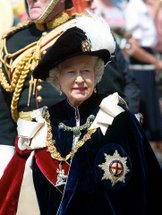
Wearing the distinctive green silk velvet robes and egret-plume hats of the Ancient Order of the Thistle, The Queen and the Duke of Edinburgh make their way to St Giles' Cathedral in Edinburgh for the annual Thistle Service, 2 July 2008, to welcome two new members into the ancient brotherhood of knights.

queen-1aThe highest honour English subjects can receive from their Queen is the Order of the Garter. Across the border in Scotland, however, exemplary service is rewarded with membership of the 11th-century Order of the Thistle. The Thistle represents the highest honour in Scotland and is presented to Scottish men and women who have held public office or who have contributed in a particular way to national life. The service celebrates the Order, its history and its current members.

Insight%20jul08%20gallery%20holy3%20largeLike the monarch, the Duke of Edinburgh was dressed in a green, white silk-lined gown, outsize gold and silver tassels and the order's badge, for the ceremony in the chivalric brotherhood's chapel at Edinbugh's St Giles Cathedral.

In line with the Order's original medieval roots - it later fell into disuse but was revived in the 17th century by James II - the royal couple were welcomed by a fanfare from the Household Trumpeters. Accompanied by the Princess Royal, and a green-clad page, they then proceeded through the cathedral into the Thistle Chapel where the historic ceremony was being held.

The recipents of the Order - who take for their motto the words 'Nemo me impune lacessit' - No one provokes me with impunity - were senior retired judge Lord Cullen, and East Lothian Lord Lieutenant Sir Garth Morrison.


Read the full article >>

Monday, 16 June 2008

William, Royal Knight of the Garter

Prince William becomes the 1000th Knight of the Garter

william2_679507nwilliam-andrew-anne_679510ncharles-camilla-wil_679519nandrew-william-coac_679521nqueen-phil-carriage_679514nqueen-phillip_679513n


Read the full article >>

Friday, 25 April 2008

We deserve Knighthoods too

To her Most Excellent Majesty, ELIZABETH the Second.

May it Please Your Majesty,

We beg forgiveness for approaching Your Majesty's throne in this manner, but we were saddened to learn that Your Majesty did not appoint the Honourable John Howard to Knight Companion of the Most Noble Order of the Garter yesterday. We were saddened not out of falsely raised expectations, but because expectations have now been raised to seemingly impossible heights, and because we in the Commonwealth are gravely starving for lack of Your Majesty's honour.

Madam, it is saddening beyond measure that we in the Commonwealth Realms abolished British Honours and knighthoods in favour of national orders without knightly rank. The old knighthoods had history, and heritage. They weren't just a Scout merit badge for good conduct, they were an honour and an obligation. Being a Knight of the Honourable Order of the Bath, or of Saint Michael and Saint George, being called "Sir" and having a coat of arms, all that was more than just window dressing. Being a knight meant chivalry, honour, tradition and obligation. It was more than the community saying "Well done", it was a way of tying our high achievers into the fabric of the community. Reminding them of their obligations, to be generous, and community-minded. Chivalrous and gentlemanly. We expect Knights to act rightly. And more than that, it was a very public salute to excellence, to kindness and to service. Our national orders, the Order of Lenin, I mean Canada, or Australia or New Zealand, are not yet on the same level. Handy to have. Nice to look at. But not elevated, not a real honour, not a knighthood.

In abolishing British honours, Your Majesty's governments wanted to reflect a distinctive national identity. This, we were told, would strengthen the community, and abolish elitism. In reality it did nothing of the sort, it destroyed our inheritance and left our communities weaker. All it did was loosen the ties of affection that unites Your Majesty with your people, and your people with each other in the community. Our national orders have no transcendent significance because they are not knightly. They have no history, no "Honourable" heritage, and, although they show the recipient to be A Nice Chap and a man of merit, they don't remind him of his obligations to the Queen and to the community that gave it to him either. Our best, brightest and kindest deserve more than a gold-plated merit badge. They deserve honour. It is a shame that we no longer believe in the concept.

Madam, because you are still able to confer honours upon Commonwealth subjects that emanate from you personally, even though your governments may silently cast aspersions for the effrontery of bypassing them, we humbly beseech your most gracious Majesty to take these matters into due consideration. We wish long life and happiness to your Majesty, and am, forever,

Your Majesty's most Faithful and obedient Subjects,

Beaverbrook and Pitt


Read the full article >>

Wednesday, 23 April 2008

KNIGHTS OF THE GARTER

The Order of the Garter is 660 years old today. The ancient Order was founded by King Edward III on St. George's Day in 1348*.

Insight_Jun04_Focus_GKnights_largeThe Knights of the Most Noble Order of the Garter are pictured at Windsor Castle in 2004, where they gather on an annual basis. The Garter is one of only three orders whose members are appointed at the sole discretion of Her Majesty. Current members can be viewed here.

The Queen and The Duke of Edinburgh will attend a Service of Thanksgiving at St. George's Chapel today to mark the 660th anniversary of the Founding of the Order of the Garter and the College of St. George and the 60th anniversary of the reintroduction of the annual Garter service by King George VI.

GarterInsigniaBurkesThe Order was founded as "a society, fellowship and college of knights" and has the motto 'Honi Soit Qui Mal Y Pense' (Old French: "shame upon him who thinks evil of it"). Back from a successful campaign in France and inspired by tales of Arthur and his Knights of the Round Table, Edward III decided to form a band of distinguished soldiers to inspire loyalty, encourage military excellence and reflect the ideal manifestation of Christian chivalry.

The Garter pertaining to England, is the highest ranking order in the United Kingdom and the oldest surviving order of chivalry in the world. Next to the Victoria Cross, it is the most prestigious honour for Commonwealth subjects.

*The foundation year is presumed to be 1348, although dates from 1344 to 1351 have also been proposed.


Read the full article >>

Thursday, 13 March 2008

The Most Ancient Order of the Thistle

Insight%20march08%20gallery%20thistle%20largeThe Queen invests the Lord Cullen of Whitekirk as a Knight of the Most Ancient and Most Noble Order of the Thistle at Buckingham Palace, 12 March 2008. The Order of the Thistle represents the highest honour in Scotland and consists of the Sovereign and only 16 Knights and Ladies Companion. The date of the foundation of the Order is not known but legend has it that it was founded in 809 when King Achaius made an alliance with the Emperor Charlemagne.


Read the full article >>

Wednesday, 2 January 2008

The Venerable Order of Saint John

Commemorating the 125th Anniversary of the Hospital of St. John in Jerusalem

Launch022

The Duke of Gloucester (right), Grand Prior of the Order of St. John, inside Priory House. Her Majesty is centrally depicted in portrait as Sovereign of the Order.


The Most Venerable Order of the Hospital of Saint John of Jerusalem is the 19th century revival in Britain of the ancient Knights Hospitaller, the military religious order that was charged with the care and defense of the Holy Land during the First Crusade. The revived order received a Royal Charter from Queen Victoria in 1888 and spread across the United Kingdom, the British Commonwealth, and the United States of America.

Today it is one of the five "Mutually Recognised Orders of St. John" - one Catholic with four in Protestant Alliance - bringing together a spirit of Christian unity in the Order not seen since the loss of Malta to Napolean in 1798, when the Hospitallers were dispersed from their last military stronghold.

The Order of St. John in the English-speaking world is not a state order, but a royal order of chivalry. Her Majesty the Queen is Sovereign Head of the Order, and His Royal Highness, the Duke of Gloucester, is the Order's Grand Prior. Their Excellencies, the Governors-General, head each of the eight national Priories, and form part of the Grand Council with the other Great Officers of the Order. The Priory in the United States is headed by a gentleman by the name of John R Drexel IV, Esq.

The Duke of Gloucester has been Grand Prior of the Order of St. John since 1974. The Order, one of whose motto is 'PRO UTILITATE HOMINUM - In the service of humanity', cares for the sick and promotes its international ideals through its work with the St John Eye Hospital in Jerusalem and the St John Ambulance Foundation, of which there are some 30 Commonwealth associations worldwide. His Royal Highness recently marked the 125th anniversary of the Hospital of St John in Jerusalem.

Launch002

Launch006

Launch010

Launch014

Launch015

Launch018

Launch016


Read the full article >>

Friday, 12 October 2007

The Order of Merit

THE MOST PRESTIGIOUS HONOUR awarded to British and Commonwealth citizens after the Victoria Cross (or civilian equivalent), the Order of the Garter (or national equivalent) and the Order of the Bath, is the highly exclusive Order of Merit. Because there are only 24 members allowed into the order at any one time, as is the case for the Garter, it is a rare day indeed to witness an actual investiture. Forget the omnipresent Al Gore and the annually bestowed Nobel Peace Prize. Look who got into the OM.

Insight_focus_nov02_group_largeAbove: Members of the Order of Merit gather at St. James's Palace following a service of thanksgiving for the centenary of the Order, 31 October 2002. Whereas the 24 Knights of the Garter meet annually, the 24 members of the Order of Merit meet only once every five years. They gathered again below just yesterday.

Insight%2520oct07%2520gallery%2520merit%2520largeThe honour is all the more prestigious given the achievements of its members, and given that it is the personal award of the Sovereign. Here the Queen invests Sir Timothy Berners-Lee, inventor of the World Wide Web, with the Insignia of a Member of the Order of Merit at Buckingham Palace, 11 October 2007. The Order was founded in 1902 by King Edward VII and is awarded specifically to scientists, artists, musicians, writers and people active in public life.

Insight%2520oct07%2520gallery%2520berners%2520largeAnother indication of its prestige is that new appointments are not announced in the annual Honours Lists, but are published separately as each appointment is made. The badge is usually presented by The Queen in a private audience at Buckingham Palace.
The Order is granted to members of Commonwealth realms as well as individuals from the UK. Recipients from the Commonwealth have included Mackenzie King and Lester Pearson from Canada (1947); painter Sidney Nolan (1983) and opera singer Dame Joan Sutherland (1991) from Australia; and the historian John Beaglehole from New Zealand in 1970.


Read the full article >>

Saturday, 31 March 2007

Bono Becomes Knight of the British Empire

BONO BECAME A KNIGHT OF THE BRITISH EMPIRE yesterday and was named a Knight Commander of the Most Excellent Order of the British Empire at the home of the British Ambassador to Ireland.

Not being a citizen of the United Kingdom or a British Commonwealth country, he won't have 'Sir' before his name. Nevertheless, he acknowledged that such an official accolade would "really help me get through a few doors I wouldn't get through. And that's the truth."
In the case of Bono, by accepting such an honour does it throw into question his legitimacy as a critic and outsider examining issues others haven't the voice or opportunity to do whilst offering him another 'gimmick'? It is no doubt welcome in that it shows how the relationship between Britain and Ireland is evolving; events such as Bloody Sunday and the hunger strikes would have made Bono an object of scorn back home. But it does compromise him and puts into perspective his defence of Blair in having lives lost through the war in Iraq as "anyone can make a mistake' and declaring that, despite all evidence, Bush has "done an incredible job."


Read the full article >>

Monday, 6 June 2005

From Honours to Merit Badges

Part of every June 6 is the Queen's Birthday Honours. It is saddening beyond measure that Labour abolished British Honours and knighthoods in 2000, in favour of the Order of Helen Clark, I mean the New Zealand Order of Merit. Knight Grand Cross of the Noble Order of Saint Michael and Saint George becomes "Member of the NZ Order of Merit." And you don't even get to call yourself a knight, Sir or Dame, just "MNZM" after your name. Underwhelmed? Me too.

The old knighthoods had history, and heritage. They weren't just a merit badge for correct conduct, they were an honour and an obligation. Being a Knight of Saint Michael and Saint George, being called "Sir" and having a coat of arms, all that was more than just window dressing. Being a knight is mixed up with chivalry, honour, tradition and obligation. It is more than the community saying "Well done", it is a way of tying our high achievers into the fabric of the community. Reminding them of their obligations, to be generous, and community-minded. Chivalrous and gentlemanly. We expect Knights to act rightly. And more than that, it was a very public salute to excellence, to kindness and to service. "The NZ Order of Merit" is on the same level as a Scout merit badge. Handy to have. Nice to look at. But not elevated, not a real honour, Not a knighthood.

In abolishing British honours, the government said they wanted to reflect that Sacred cow "The New Zealand identity", to bring a distinctive flavour to the honouring of Kiwis by Kiwis. This, they said, would strengthen the community, and abolish elitism. Oh please. Yet again, this infantile insistence on destroying our inheritance has left the community weaker. It has loosened the ties of affection that unites the Queen and her people, and her people with each other in community. Who cares about the Order of Lenin, I mean Merit? It has no transcendent significance. It has no history, no "Honourable" heritage, and, although it shows the recipient is A Nice Chap, it doesn't remind him of his obligations to the Queen and community that gave it him either. A healthy dose of elitism does no-one any harm. Our best, brightest and kindest deserve more than a gold-plated merit badge. They deserve honour. It is a shame that Labour no longer believes in the concept.

Pitt the Younger (originally posted here)


Read the full article >>

Wednesday, 13 April 2005

In Defence of Pomp

Readers, please find below the text of a letter that I wrote to a Peer of my acquaintance last fall.

My Lord X,

I read today of the findings of a British Parliamentary Committee, which is apparently recommending, to the British Government and Crown, the abolition of (at least Parliament-recommended) knighthoods, and the renaming of the Order of the British Empire, to the Order of British Excellence. I thought it might be of some use or interest to Your Lordship, to hear the opinion of one subject of the British Commonwealth, regarding these recommendations. When we met, we discussed the general subject of peerages and knighthoods, in relation to subjects of former British Empire, and current British Commonwealth, nations. At that time, Your Lordship suggested that, for example, the honour of the Order of Canada, was a satisfactory and equivalent substitution for both peerages and for formerly applied Imperial honours such as the OBE. I did and do not agree with that view, but I did not argue the point at the time. Given these recent developments, however, I feel obliged to speak my mind on the matter. As you are, My Lord, the only British Parliamentarian with whom I have the honour to be personally – if only slightly - acquainted, I hope Your Lordship will forgive my indulgence in advancing my views on this subject. In my defence, let me say that I believe very deeply that this is a matter of the utmost importance - of greater importance, indeed, than is apparently believed by the Parliamentary Committee in question.

I believe sincerely that the ties that bind the nations of the British Commonwealth, have always been and remain of great importance today – if in no other sense than that we share certain, common threats to our security, beliefs and way of life, which compel a unified response – a response that must be animated by a clear knowledge, sense and reflection of our own, shared nature and beliefs. Every nation and every people must subscribe to a history, and a set of principles, which collectively define its substance and which guide its policies and actions. For Canadians, in particular - who by common consent rejected the rather more radical and fundamentally more geographically-rooted tenets of the American Revolution - it has traditionally and always been the institutions of Great Britain and her Crown, which have fulfilled this role; and which have dulled the relative allure of the equally meritorious and more geographically-proximate and -rooted spirit and institutions which have replaced them in the United States. I know from my own family experience that the binding, defining and inspiring power of British institutions has been operative throughout Canadian history, for and with respect to peoples of all geographical and ethnic origins. That power is, in my opinion, indissolubly linked with the pomp & ceremony of the institutions of Great Britain, the British Crown, and their associated grandeur, histories, honours, titles and ranks. This is a critical point, in that it suggests that, if the fact and ceremony of the historical and, particularly, the Royal associations are removed and alienated from these institutions, honours and privileges; they shall cease to have the same meaning and force. I am quite certain that noone in Canada – of any political or other opinion or persuasion – would honestly assign to the Order of Canada, the same fundamental meaning, and sense of honour and gravitas, as to the Imperial honours which it replaced. It therefore follows that the effective abolition of these honours even in Great Britain would have the most undesirable consequences, in terms of a dilution of the impact and intrinsic power, merit and meaning imputed to their replacements.

In a world in which the mutual allegiance of the nations of the British Commonwealth – an allegiance underwritten fundamentally by adherence to a shared set of principles – and the allegiance of Great Britain herself to her own roots, and evolved core beliefs and principles; mattered not at all, these consequences might be considered of little but sentimental weight. However, such is not the world in which we live today. If nothing else, the men and women of our British Commonwealth military forces, who are now engaged throughout the world in difficult and dangerous tasks in our defence, deserve more on which to “hang their hats,” than the potential reward of honours and institutions which are without history and devoid of intrinsic meaning or merit, and which explicitly reject the ties that bind them to their predecessors and counterparts at other difficult and pivotal moments of our common history. I therefore humbly and respectfully urge Your Lordship, should Your Lordship be so inclined, to reject the findings and recommendations of this particular Parliamentary Committee, with all the passion and conviction that Your Lordship can muster.

I remain your sincere and humble servant,

Walsingham


Read the full article >>